Who hasn’t heard of Carnival in Brazil?
Being St. Lucian, I’ve always loved the music, costumes and excitement of Carnival bands and floats. I’m less a fan of the bacchanal atmosphere and haven’t been to any Carnival festivities in years.
Being in Recife, I got to learn about some of the origins of its Carnival and discover a culturally rich region.
Recife is the capital of Pernambuco, on the Atlantic coast. It is one of the homes of maracatu nação, a performance tradition with African roots that includes music, dance, spirituality and a royal procession.
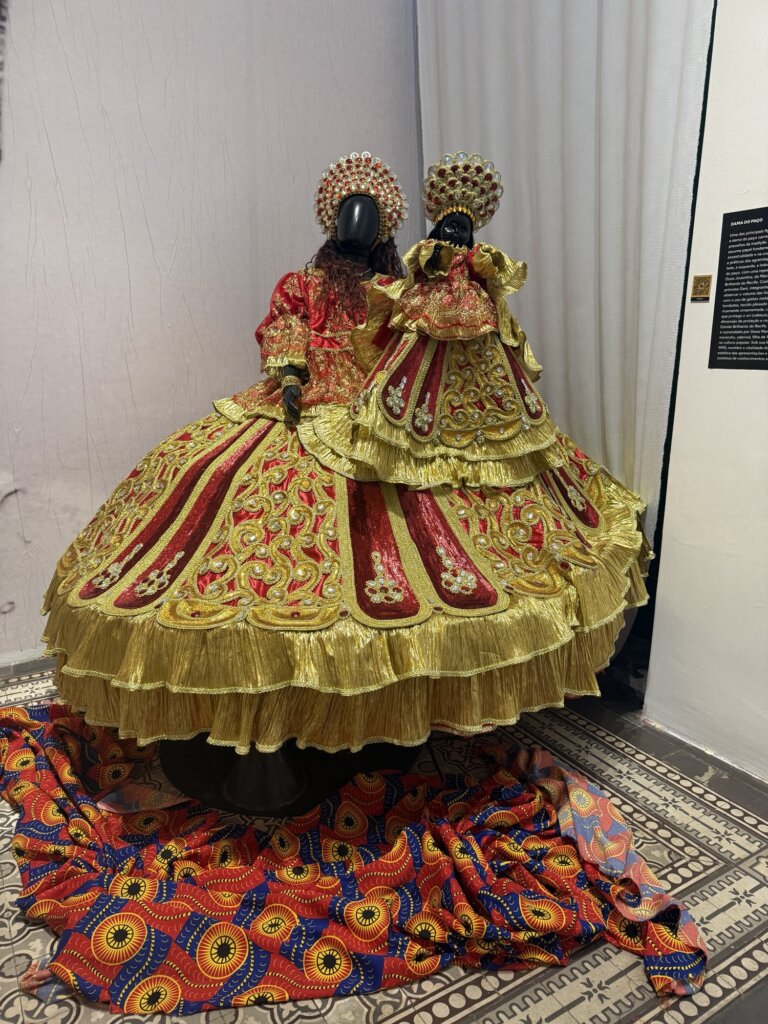
Maracatu nação developed from coronation ceremonies for Black kings and queens, particularly the kings of Congo. Its processions still include a royal court, with a king, queen and dama do paço carrying a sacred doll called a calunga. Large alfaia drums drive the music.
The connection to Congo caught my attention. As a St. Lucian, I grew up with Carnival. I knew that many Caribbean and Brazilian Carnival traditions had African roots, but I had never learned about the kings of Congo or their connection to maracatu.
Living and Working in Recife
I arrived in Recife on a Friday and got through the airport quickly. My friend was waiting for me, and we took an Uber to her family’s home in Boa Viagem.
My first impression was that Recife was large. That impression only grew throughout the week. It later took us more than 50 minutes to get from Boa Viagem to Oficina Francisco Brennand, and we were still in the same city.
This wasn’t a regular holiday. I was working during the week, so I fit sightseeing into the weekend and a couple of afternoons. Working was easy. There was a desk I could use and a coworking space in my back pocket if I needed it. I never did.
I worked from Saltim Café & Tal for a few hours one day, with a flat white and a slice of carrot cake with chocolate sauce. Otherwise, I worked from my room and joined the family for meals.
Staying with my friend’s family gave me a very different experience than I would have had in a hotel. Her father did most of the cooking and everyone was very welcoming. They seemed determined that I should try as many local foods as possible. I was happy to cooperate.
Frevo, Maracatu and Recife Antigo
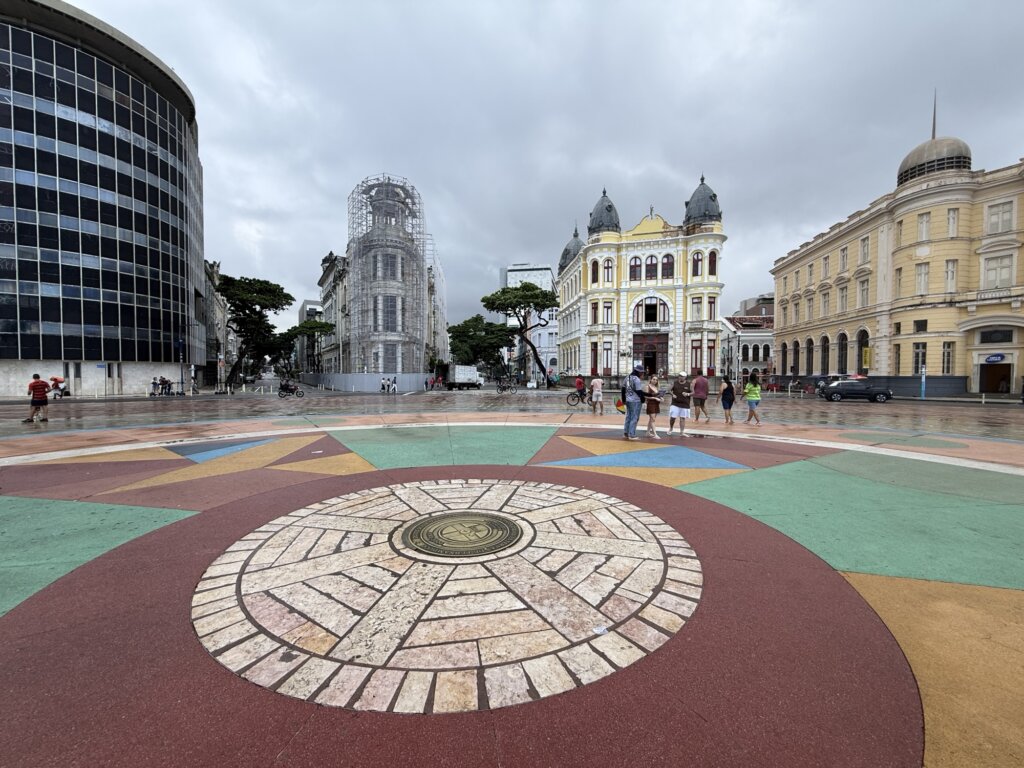
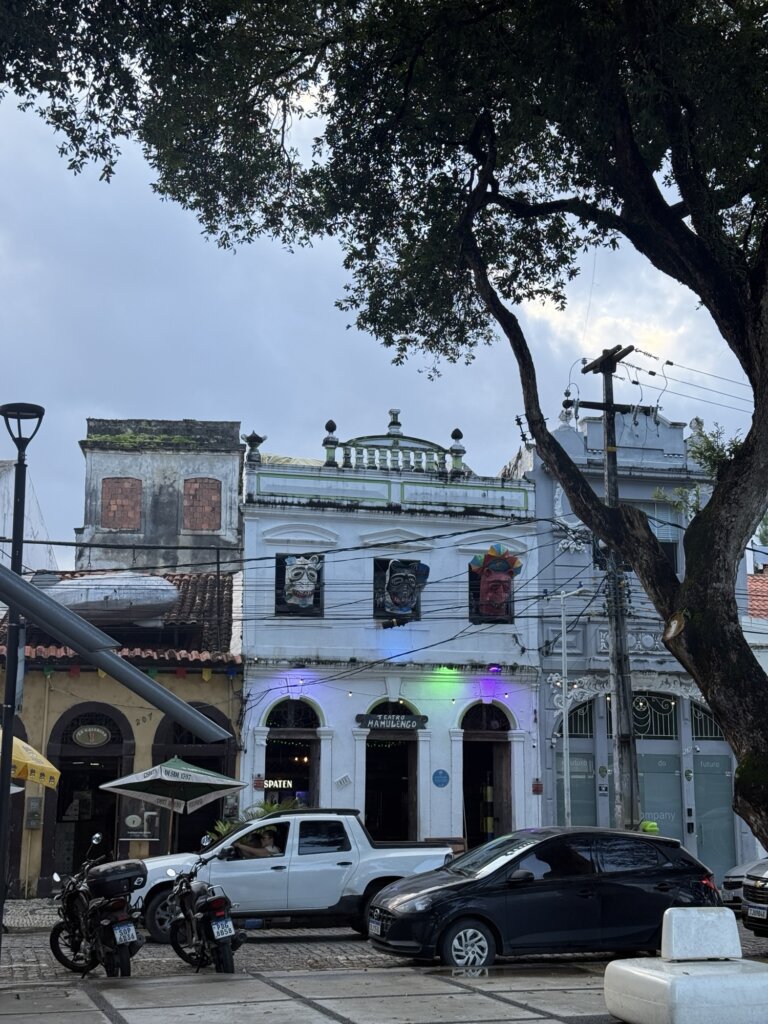
On Saturday, my friend, her sister and I visited Recife Antigo.
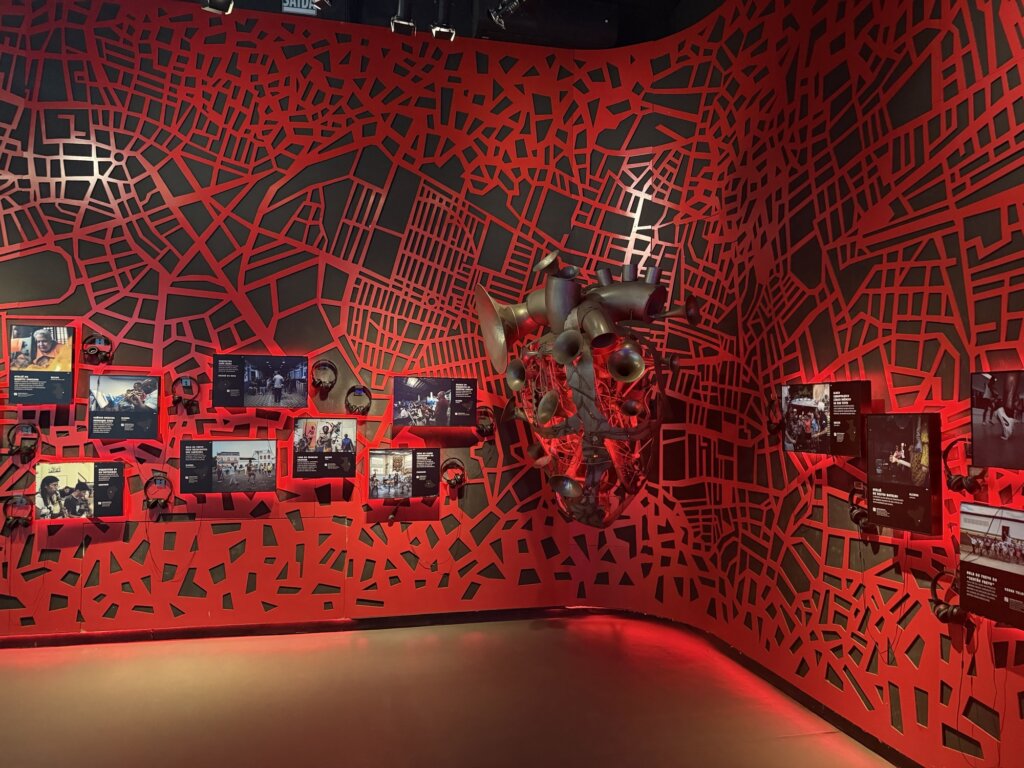
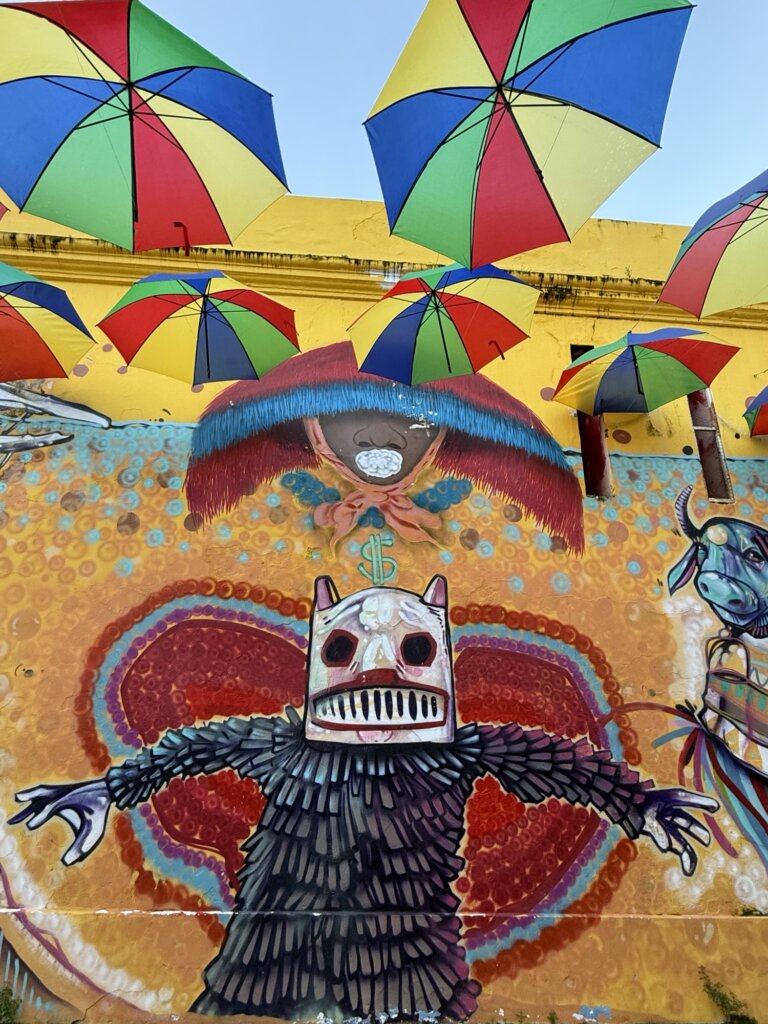
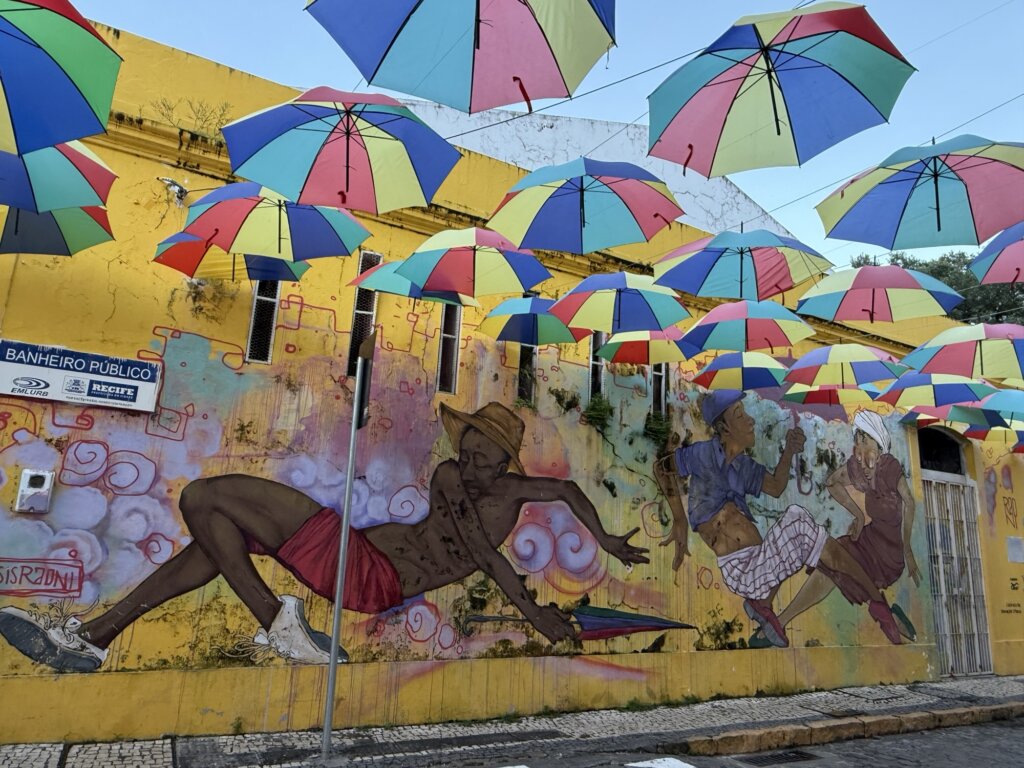
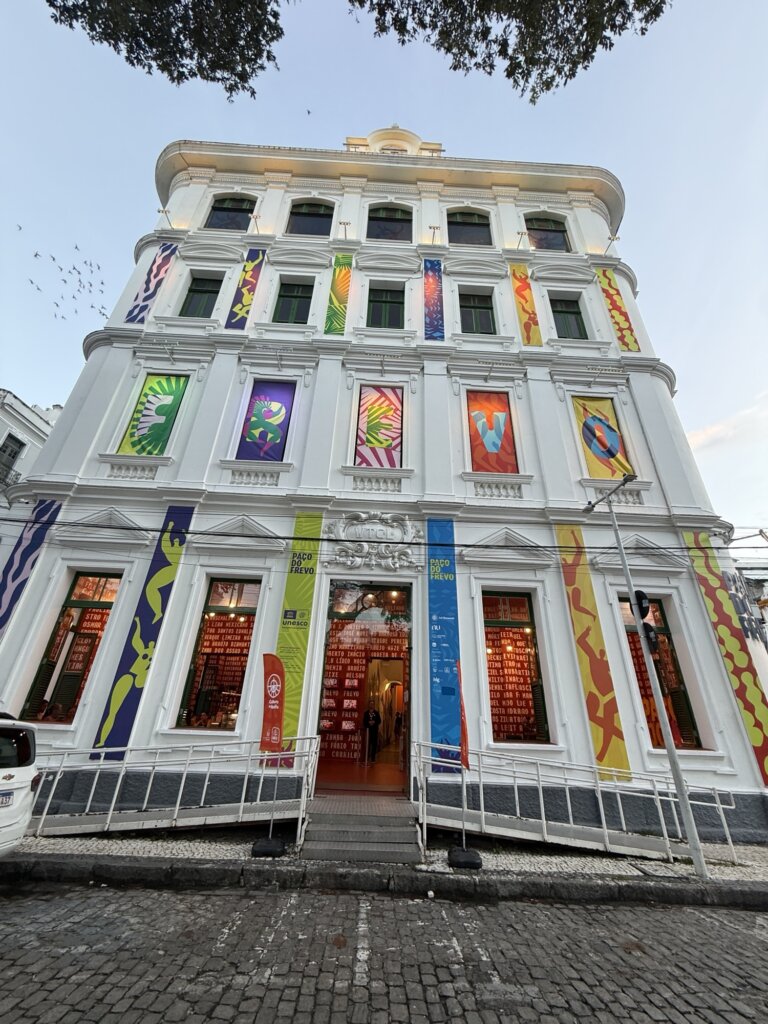
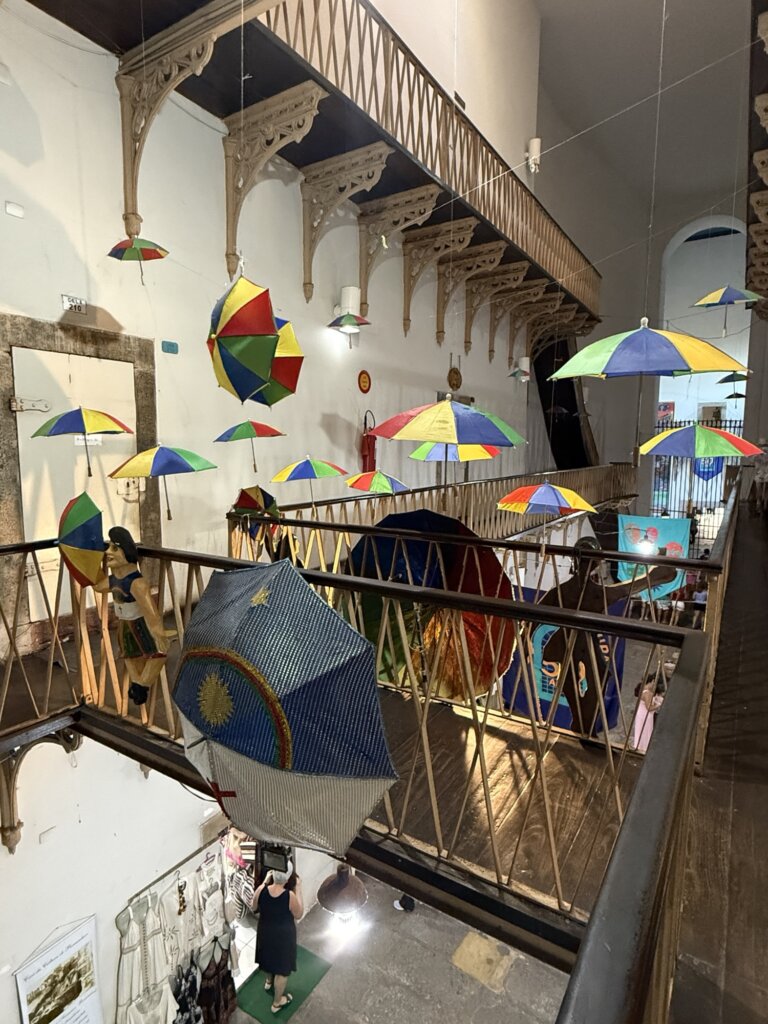
At Paço do Frevo, I learned that frevo and maracatu are different traditions. Frevo developed in the streets of Recife, with fast brass music and acrobatic dancing. The dancers carry small, colourful umbrellas, one of the most recognizable symbols of Carnival in Pernambuco.
Some of the dance movements were influenced by capoeira. Fighters accompanying Carnival bands disguised their movements as dance. Over time, the umbrella replaced the sticks and other weapons they had carried.
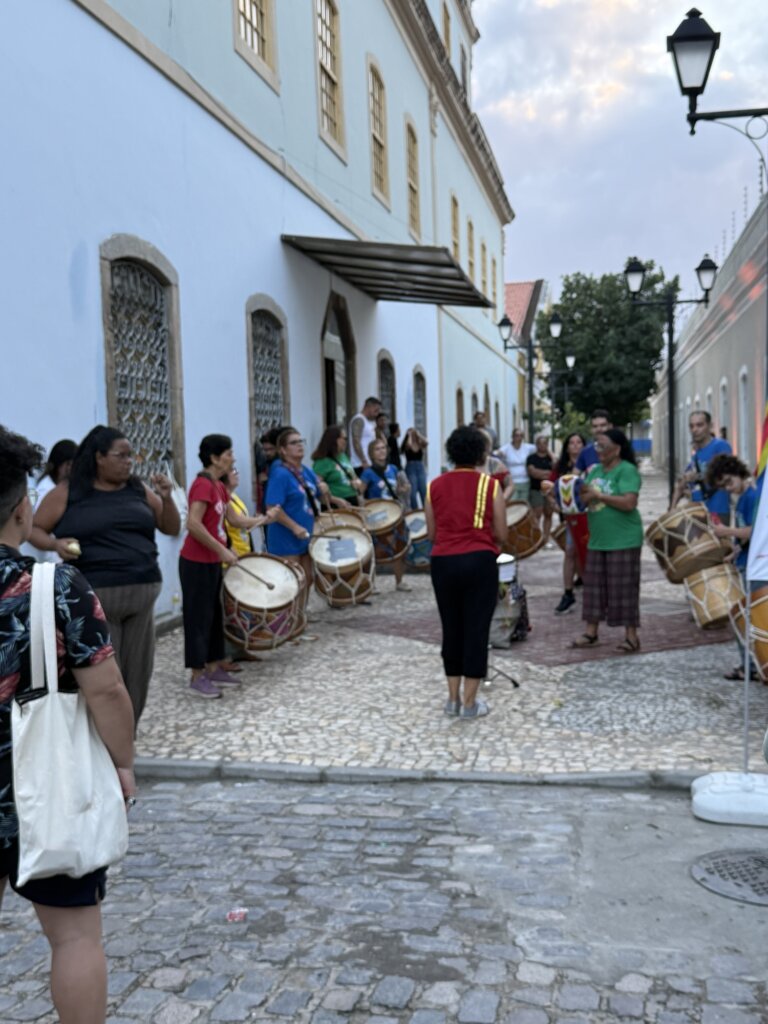
Maracatu is led by percussion and built around the procession of a royal court. Frevo feels fast, individual and almost airborne. Maracatu feels grounded in the drums.
I enjoyed the photographs, costumes and rows of colourful umbrellas at Paço do Frevo, but almost all the information was in Portuguese. I could see that there was a rich story around me without being able to understand most of it. My friend was gracious enough to interpret.
Outside the museum, we heard maracatu and heard a group practicing. We stopped to appreciate the beats. It was perfect, with the umbrellas above the street and cultural scenes on the walls.
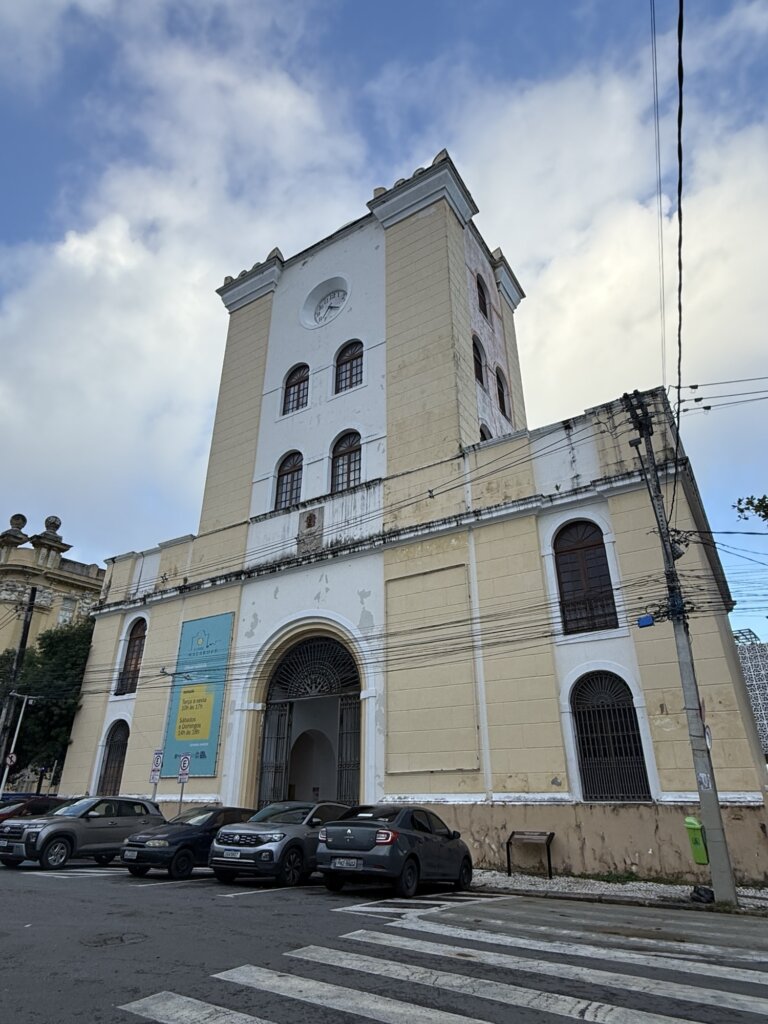
Then walked near Praça do Arsenal and Torre Malakoff. The square is named for the naval arsenal that once occupied the area. The tower was later used as an astronomical observatory.
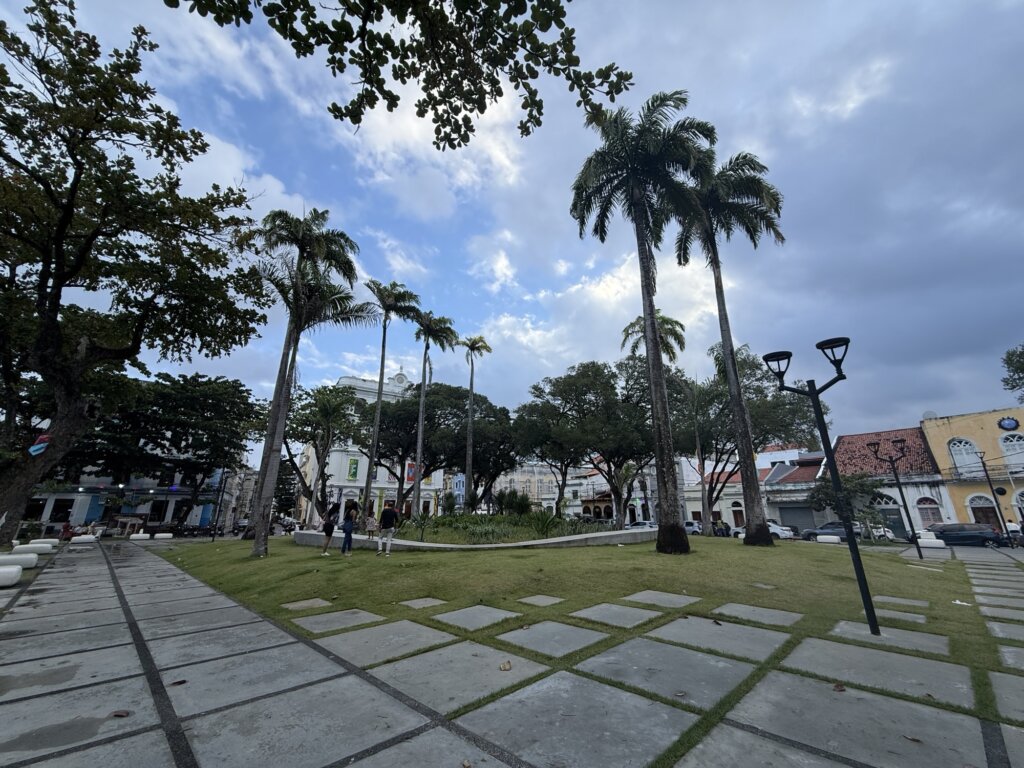
Along the waterfront, I saw a statue of a man holding a drum. My friend explained that he is Naná Vasconcelos, a Recife-born percussionist who became internationally known. Seeing him honoured beside the water made more sense once I understood how central percussion is to the culture of Pernambuco.
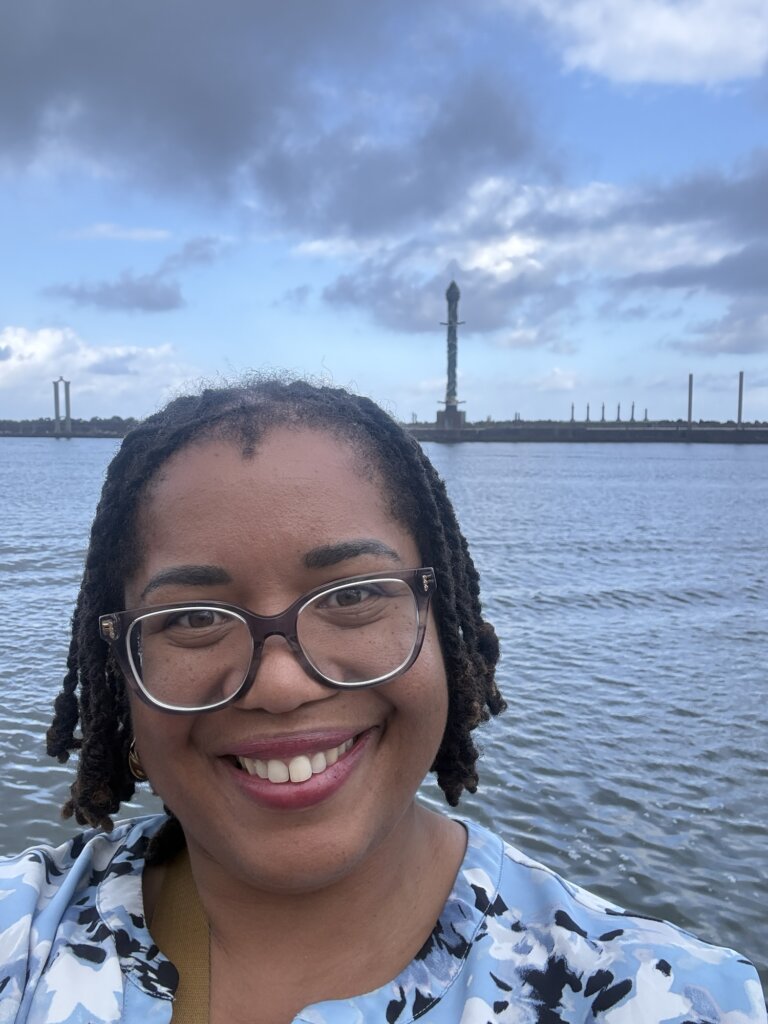
Across the water from Marco Zero was the Francisco Brennand Sculpture Park. Its centrepiece is a 32-metre ceramic tower called the Coluna de Cristal. It looks like a giant penis.
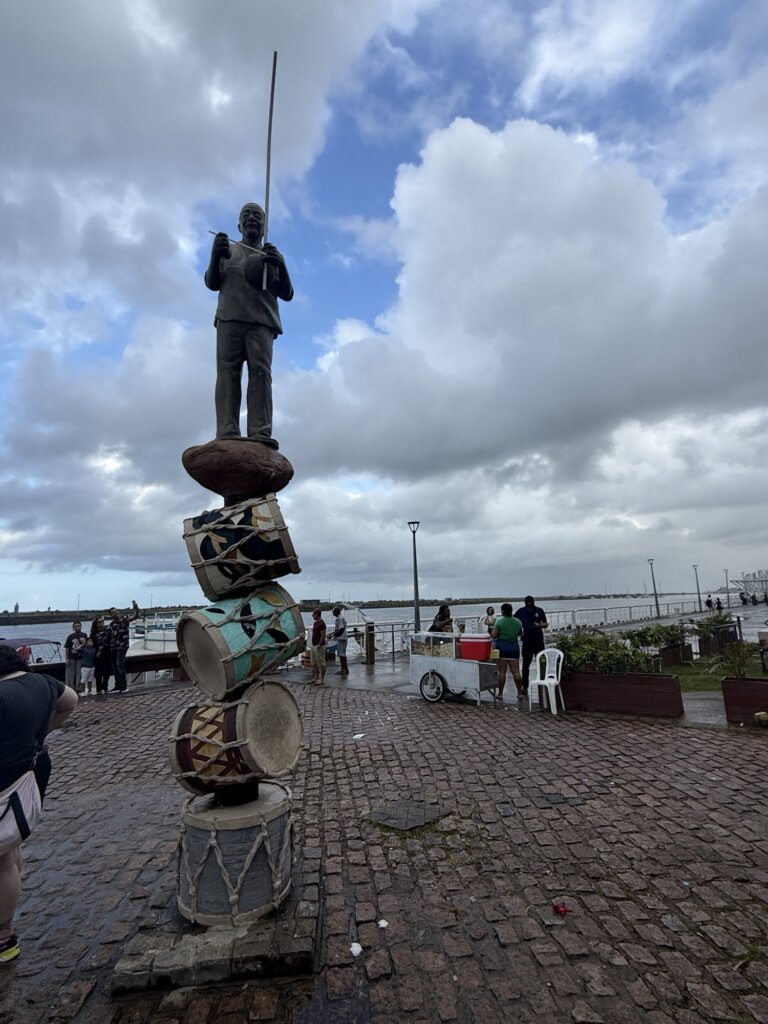
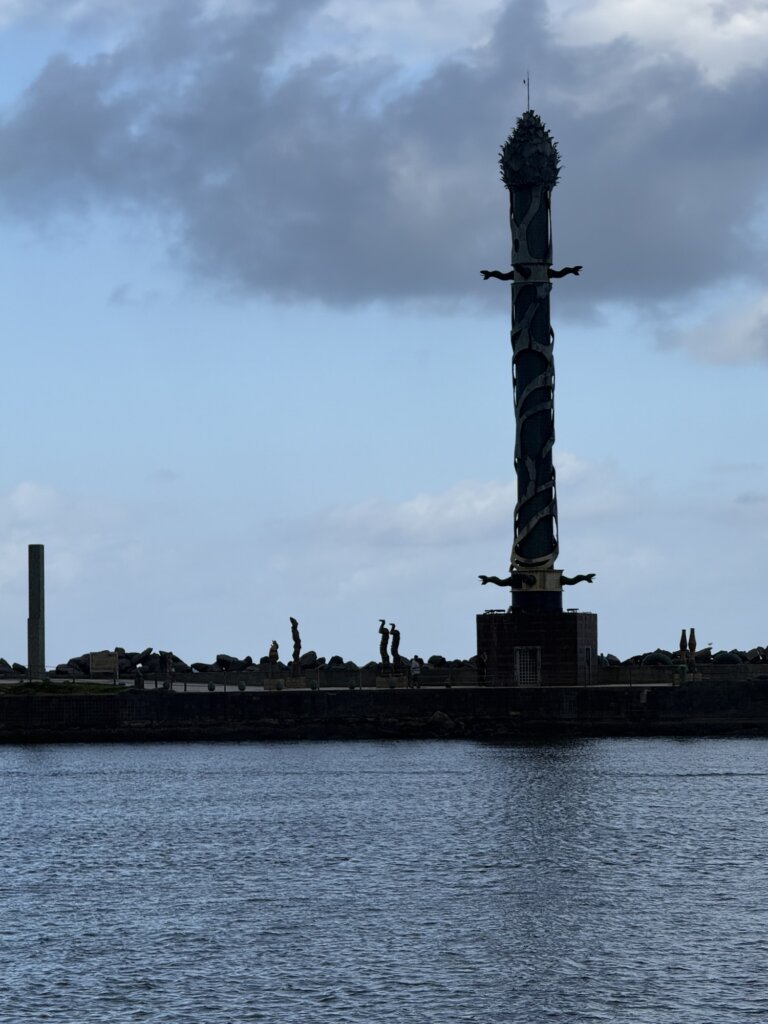
Saturday was a good food day. I drank fresh coconut water and had cocada ice cream, made with coconut and condensed milk!
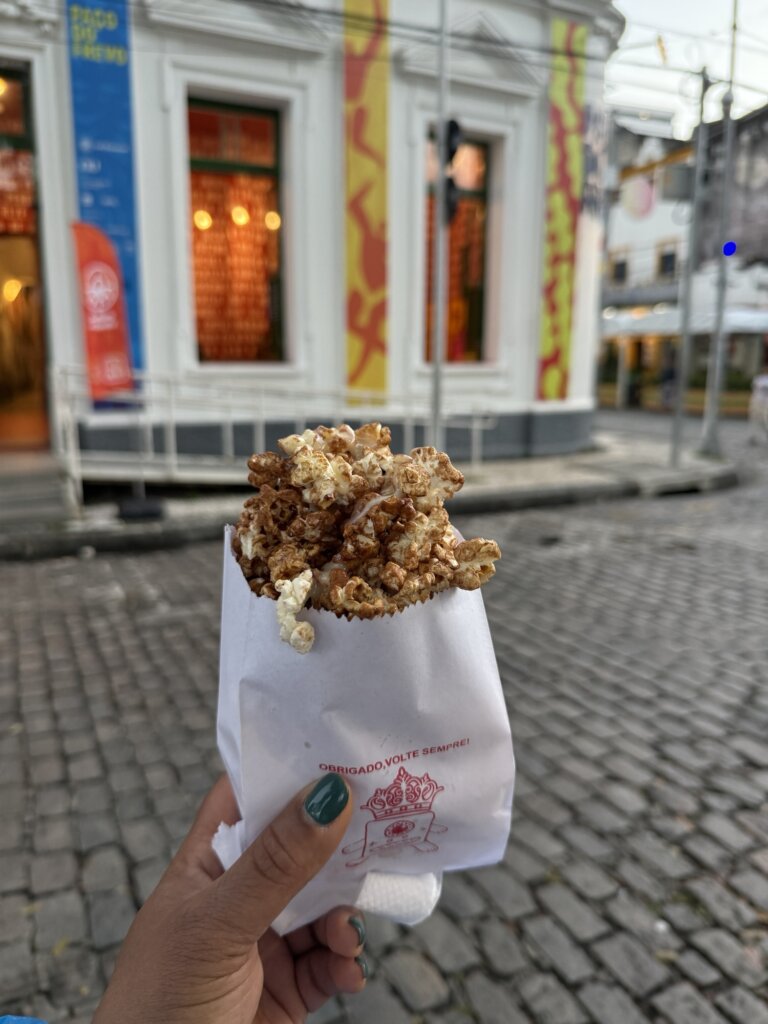
We also stopped at a popcorn stall. The vendor put freshly made caramel corn and buttered popcorn together, then poured condensed milk over the caramel corn. The combination sounds excessive. It probably is. It was also delicious. The small size was exactly enough.
Colour and Views in Olinda
On Sunday, we went to Olinda.
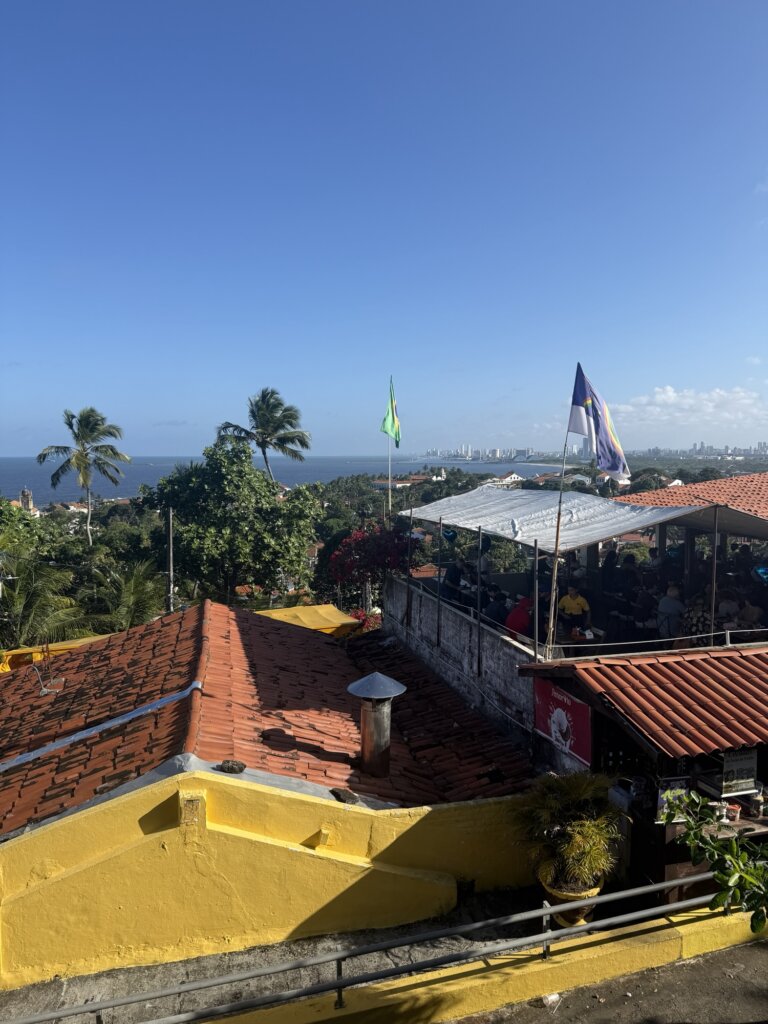
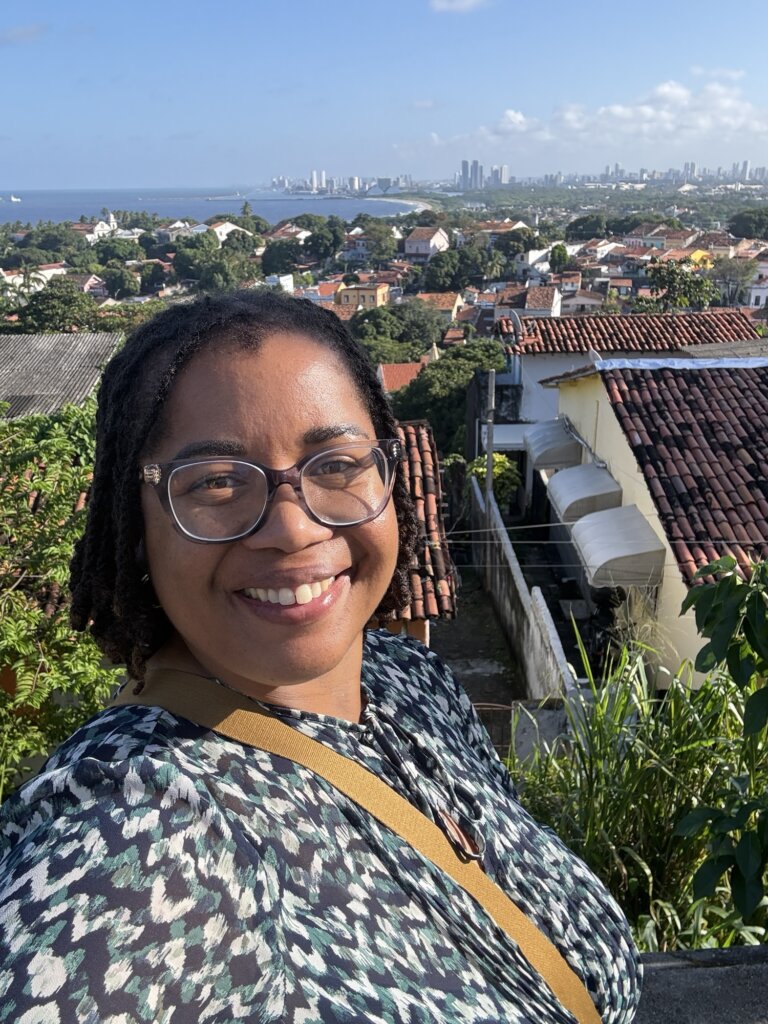
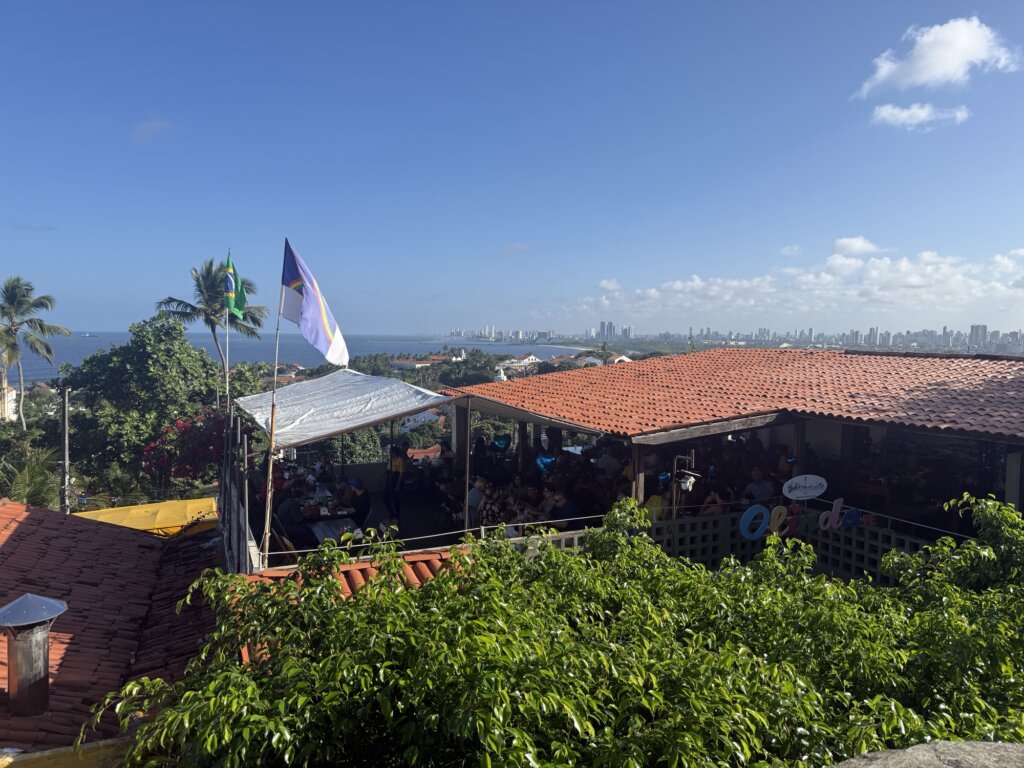
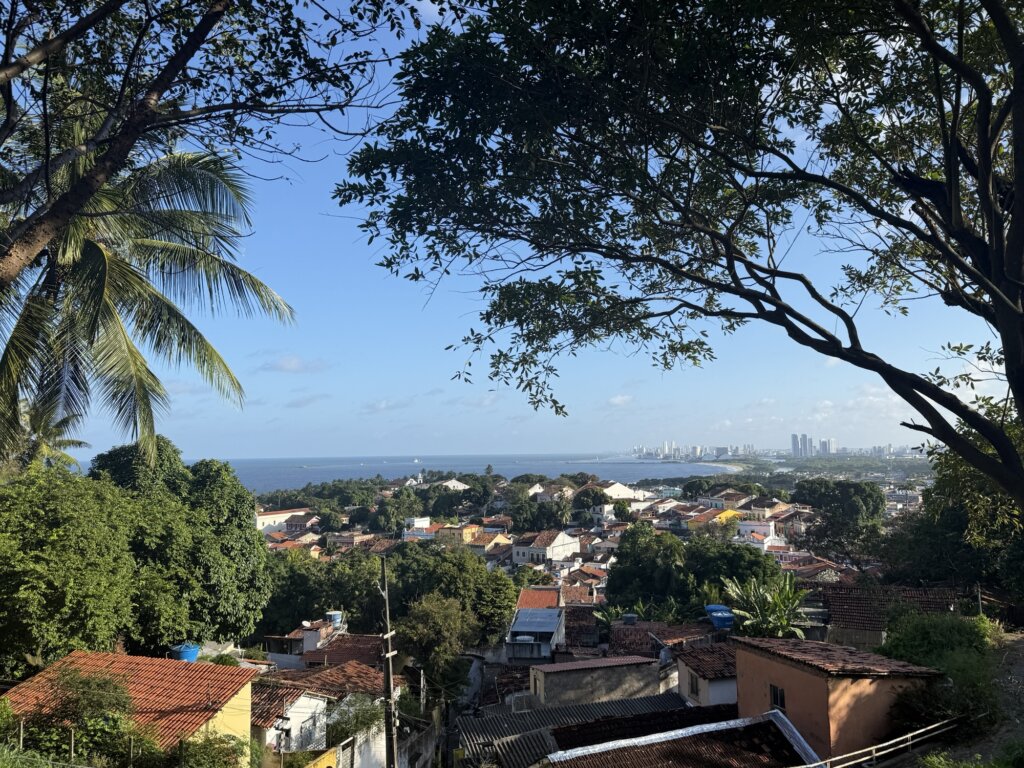
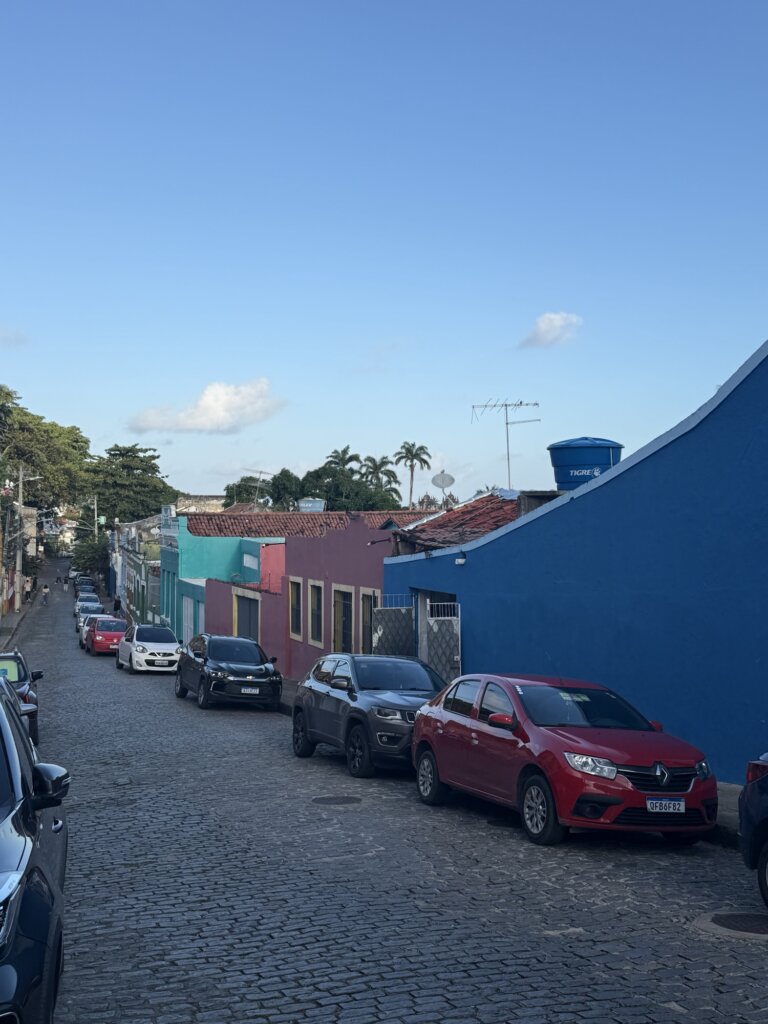
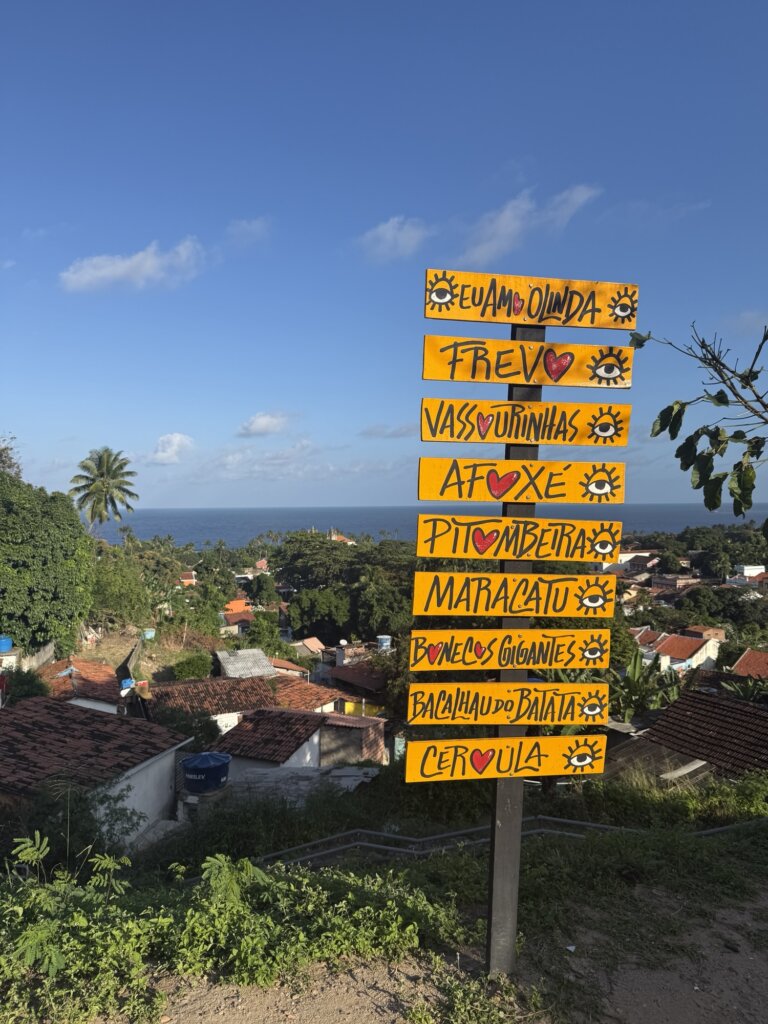
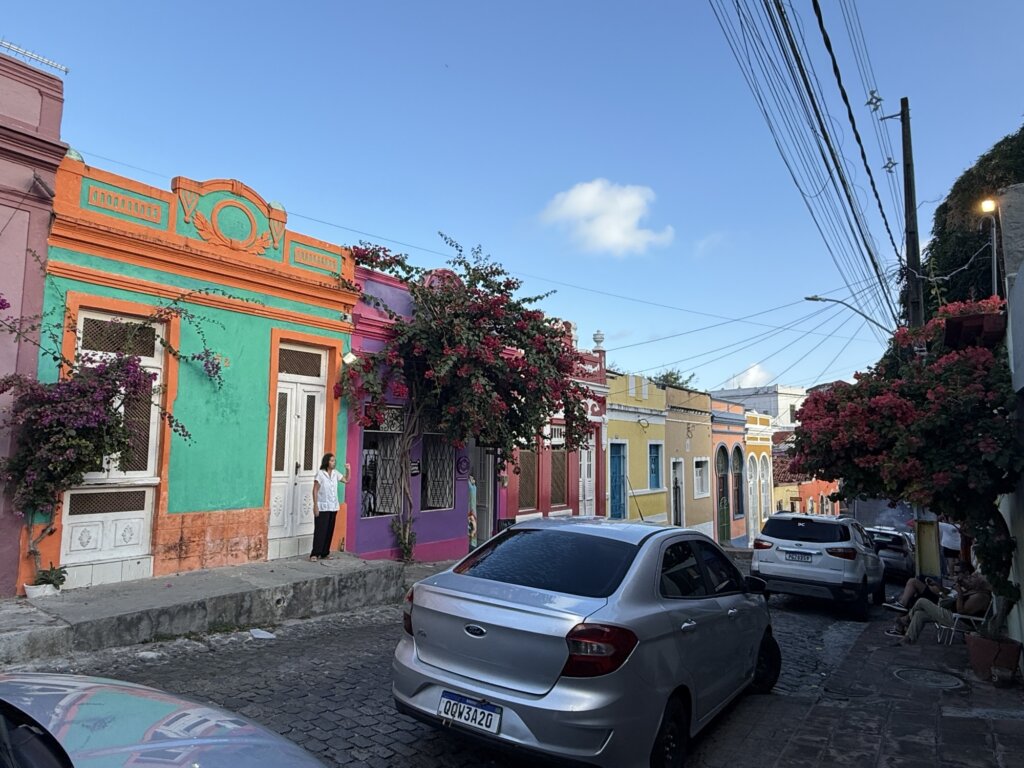
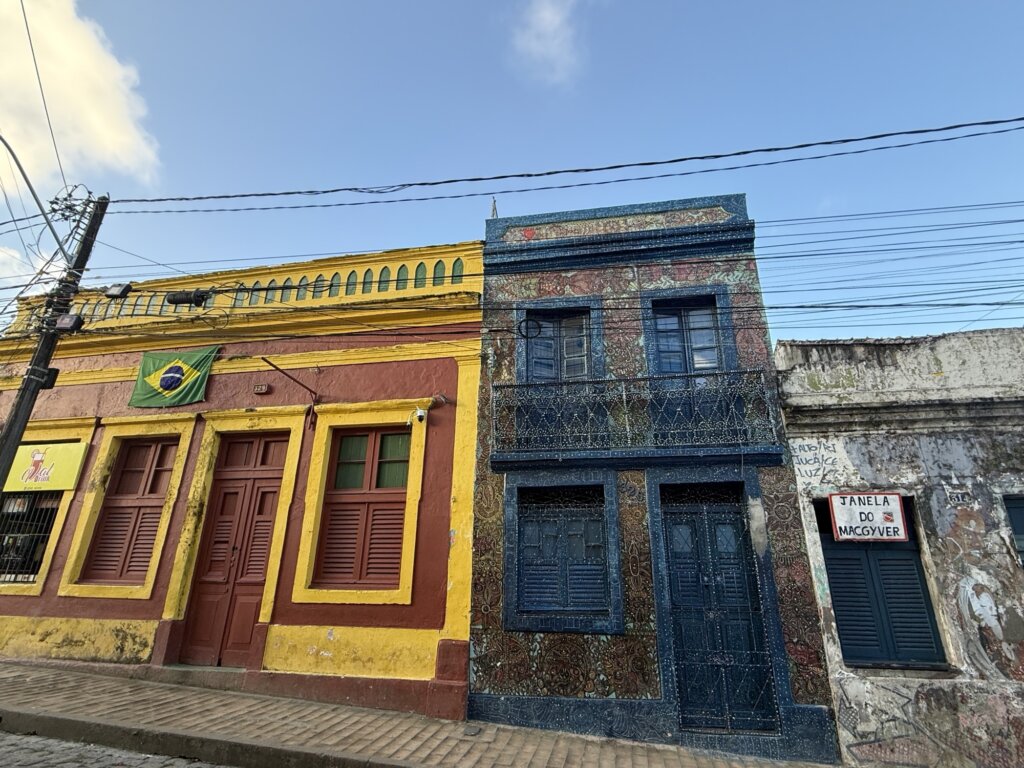
The historic centre sits on a hill overlooking the Atlantic. Olinda was once the colonial capital of Pernambuco and grew wealthy through sugar. The Dutch looted and burned it in the 17th century, and much of what exists now dates from its later reconstruction. That is a lot of history underneath where what stood out to me was the colors.
We were smart enough to take an Uber to the top of the hill and walk down. We considered visiting the cathedral, but the QR-code system to buy a ticket was ridiculously complicated. We were mainly interested in the views, so we gave up and kept walking.
The colonial houses were painted in different colours, and bougainvillea appeared along the way in several hues. I kept noticing the flowers. They softened walls, spilled over fences and added their own colour to streets that were already full of life.
We visited the Casa dos Bonecos Gigantes e Mirins de Olinda. The giant puppets are a major part of Olinda’s Carnival and represent musicians, politicians, historical figures and characters from local culture. Seeing them inside a museum, standing silently and towering over us, made me wonder what they would feel like moving through crowded streets during Carnival. I mostly find it scary as it reminds me of a post-Christmas holiday/fair called square in St. Lucia. I remember being afraid of the men on stilts as a child.
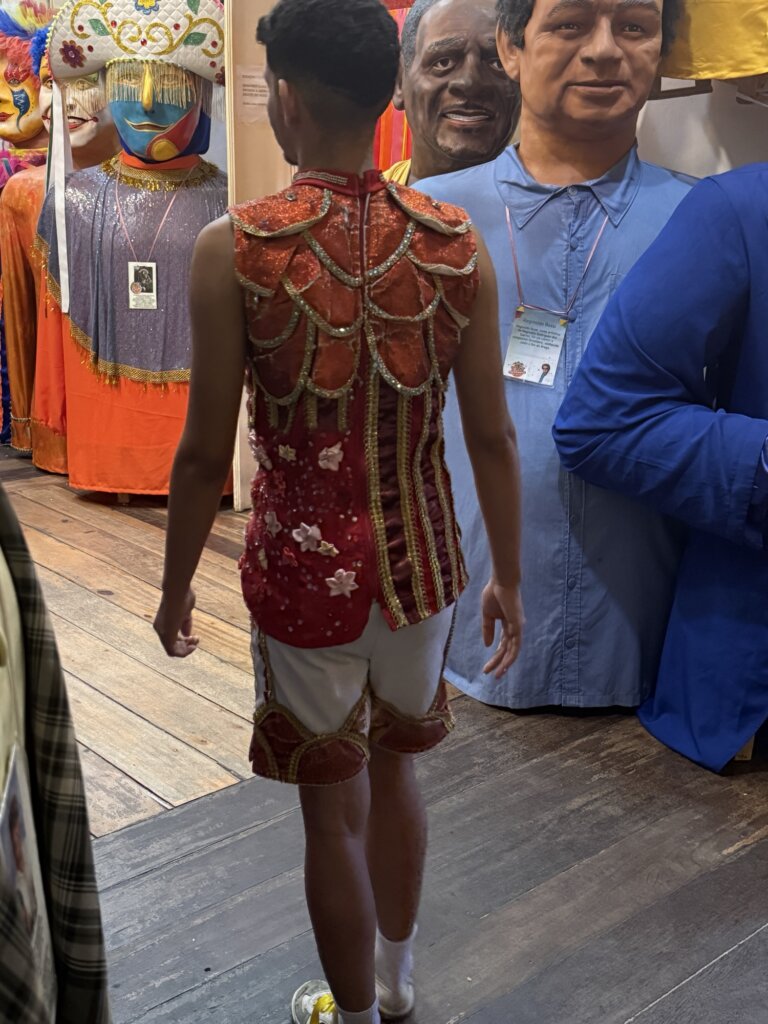
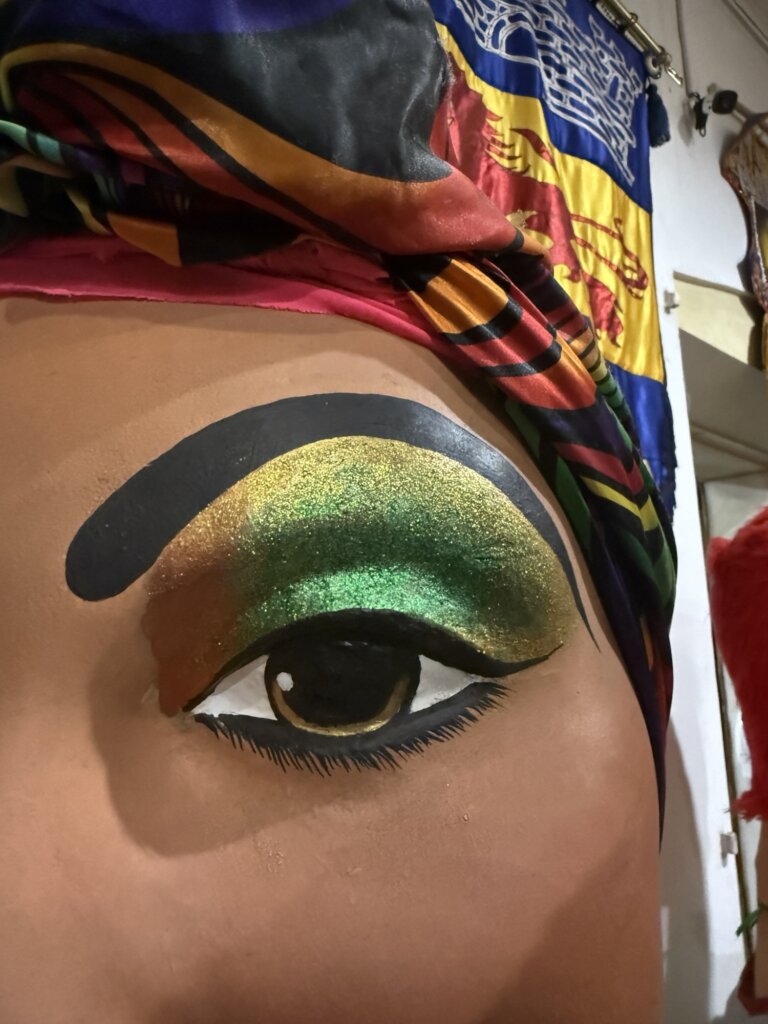
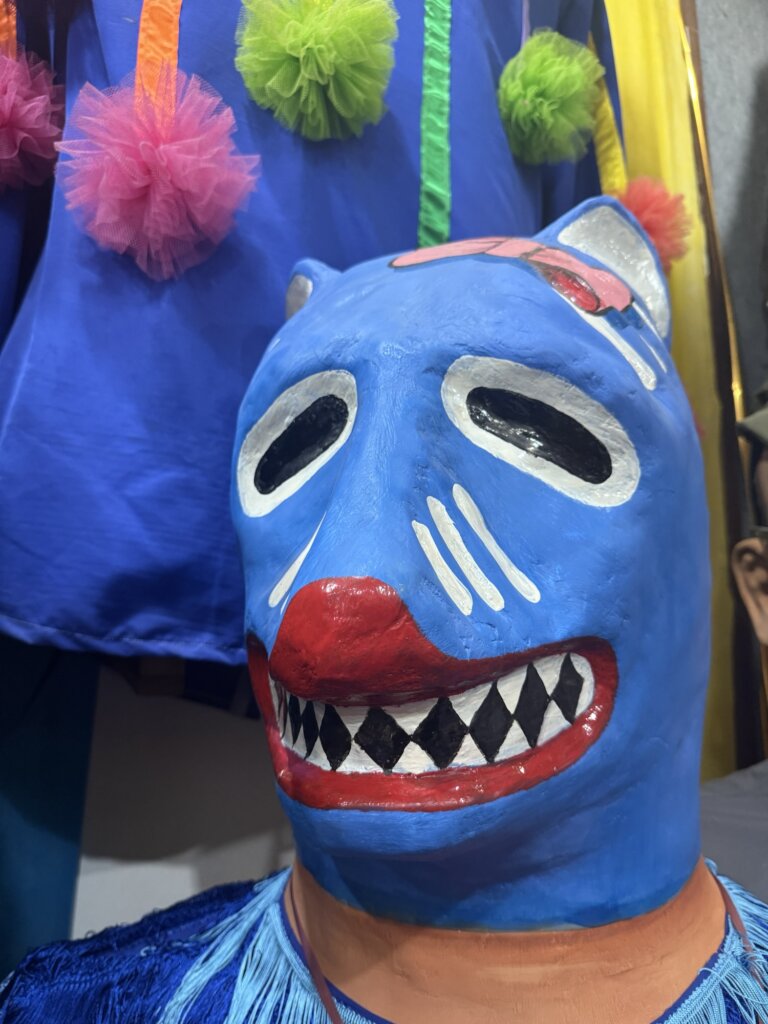
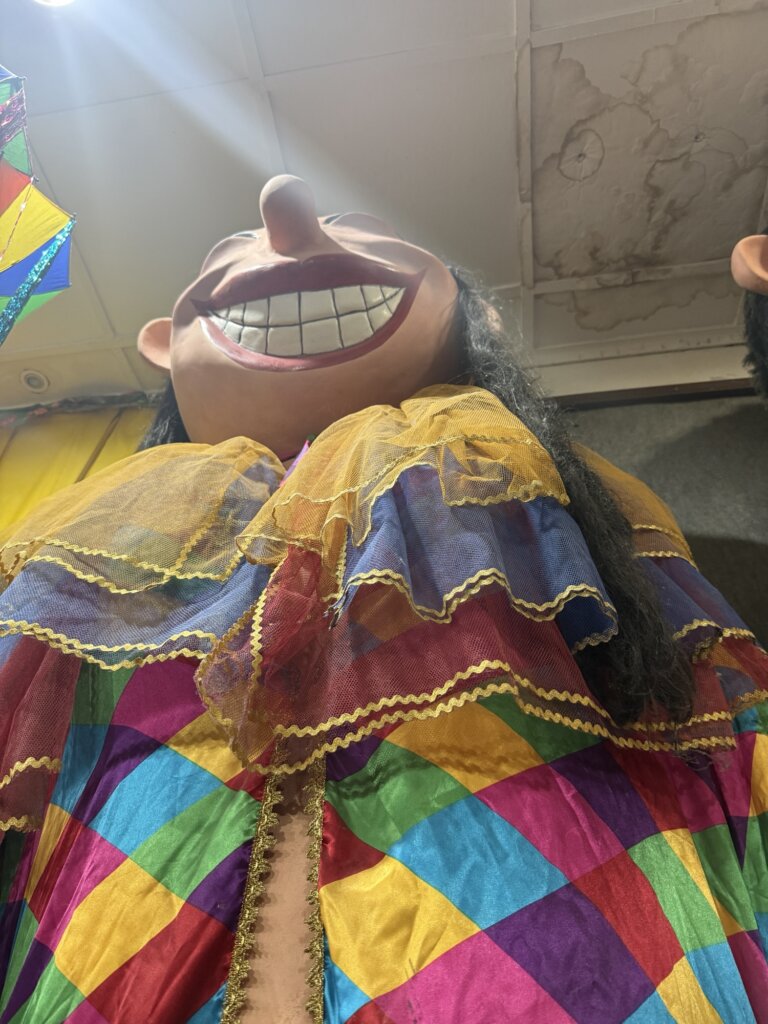
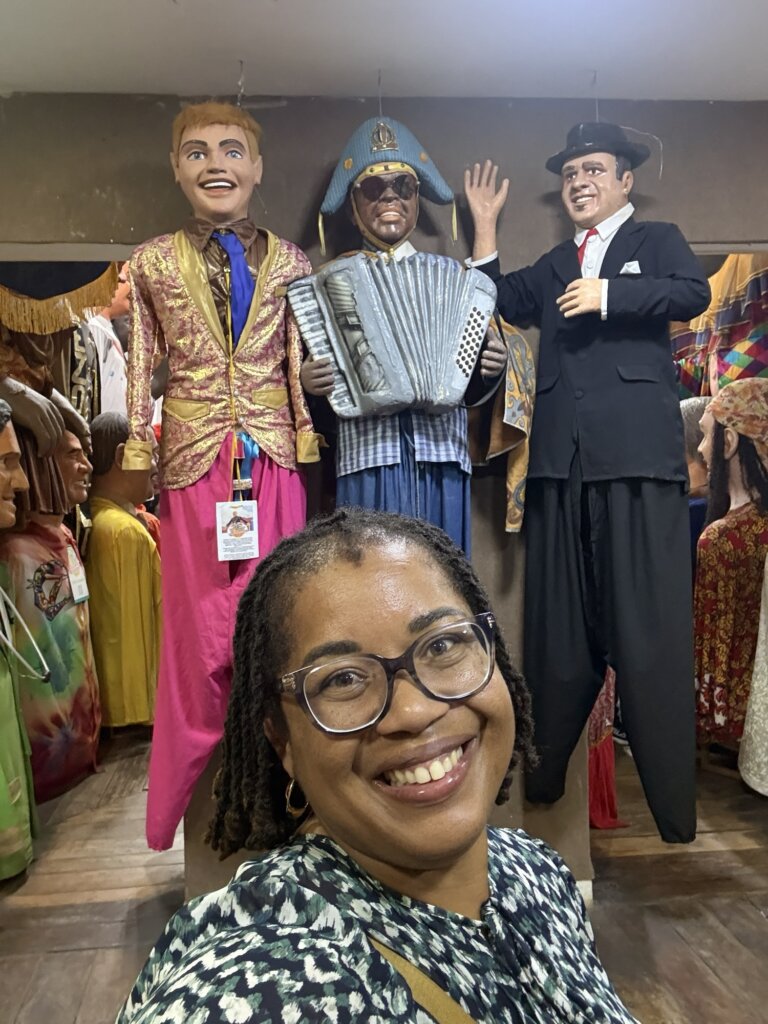
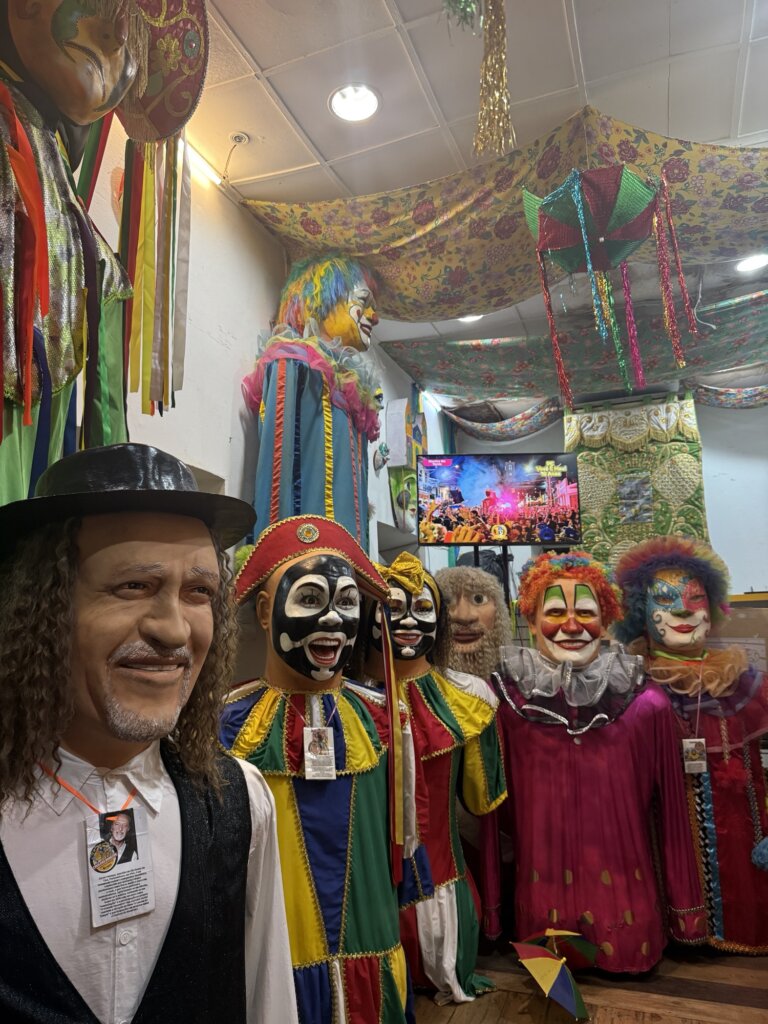
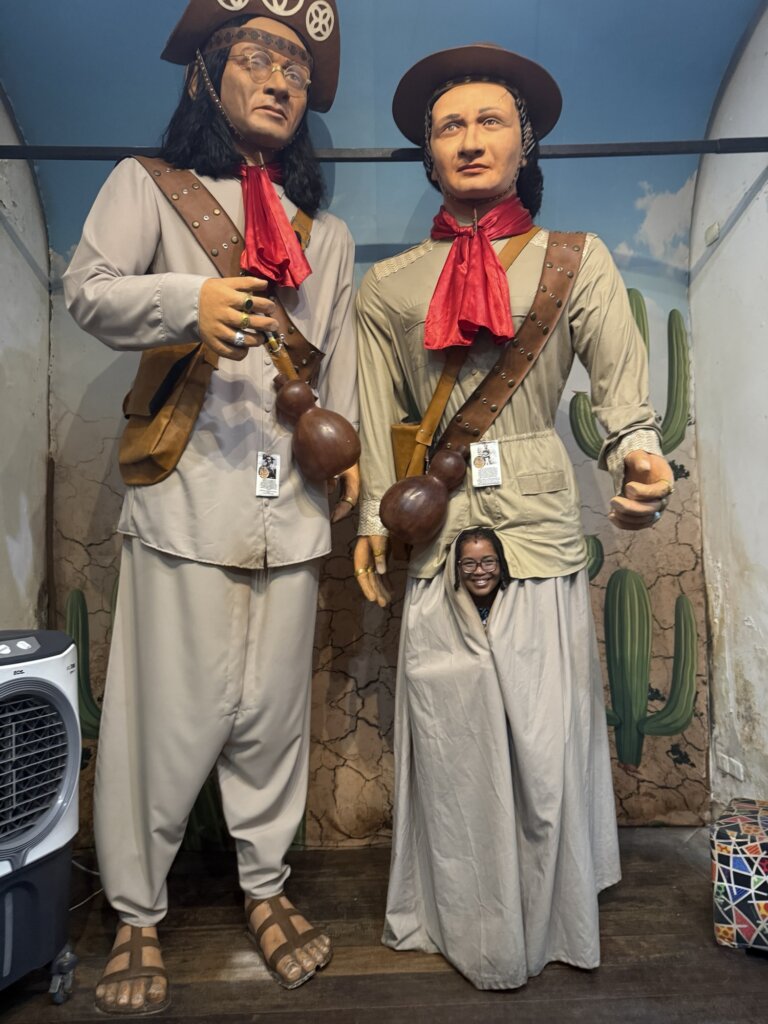
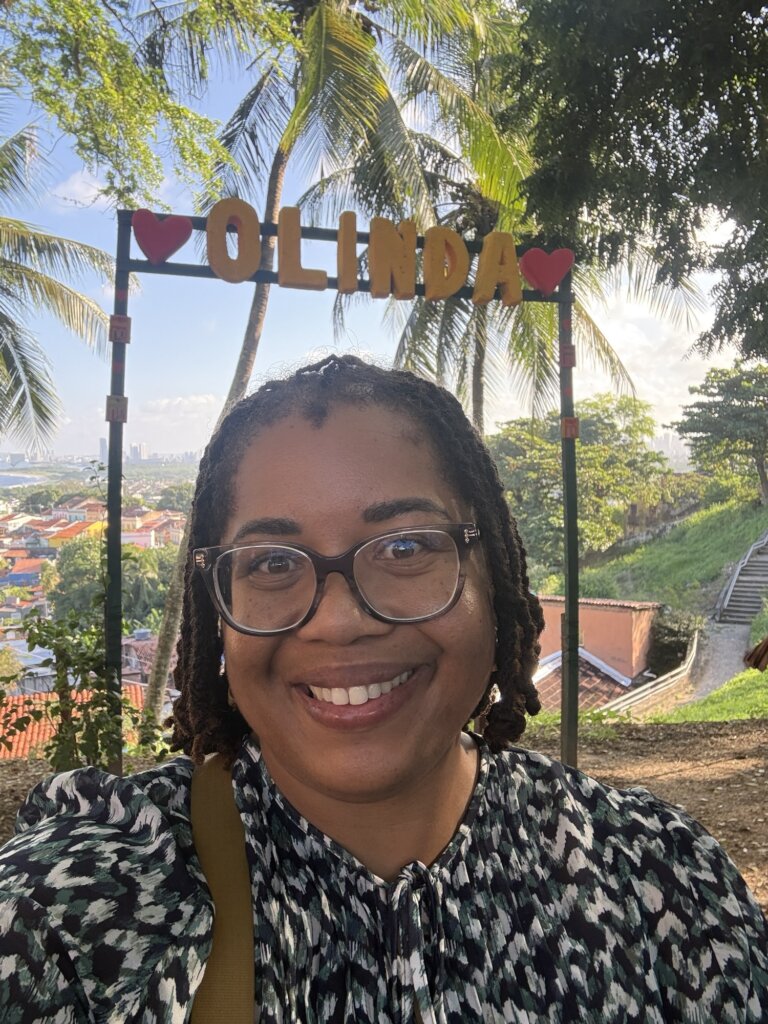
It was a hot day and we kept the pace relaxed. We did some shopping and took photos at the Olinda sign. Then stopped at Alma Art Café for coffee.
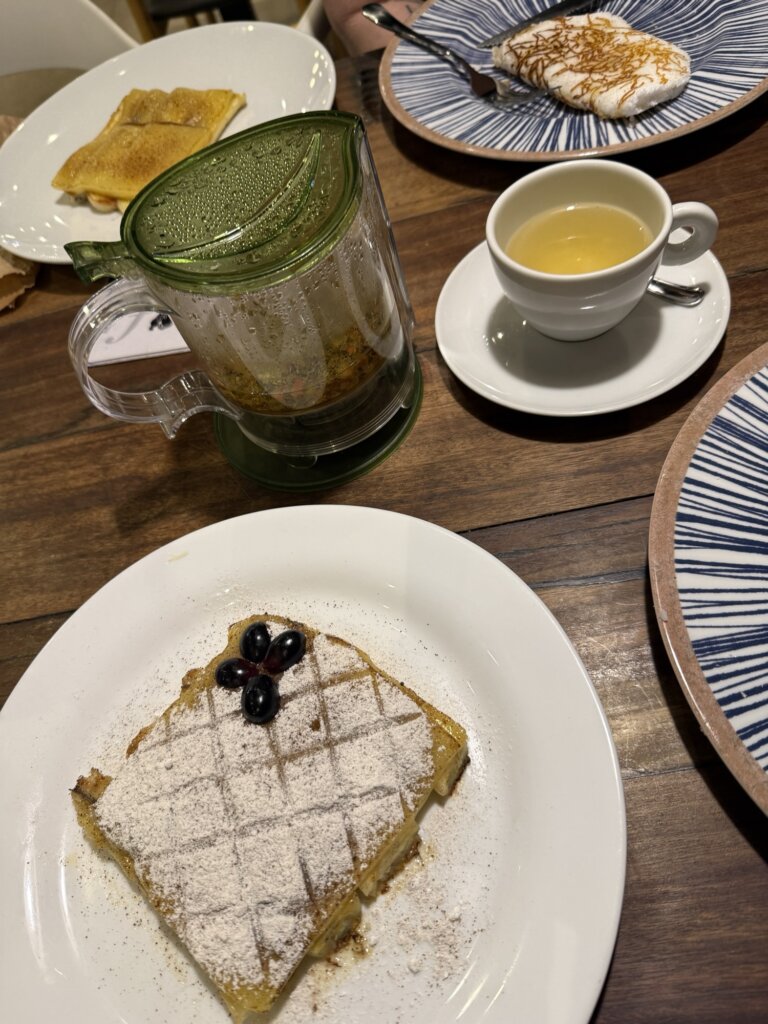
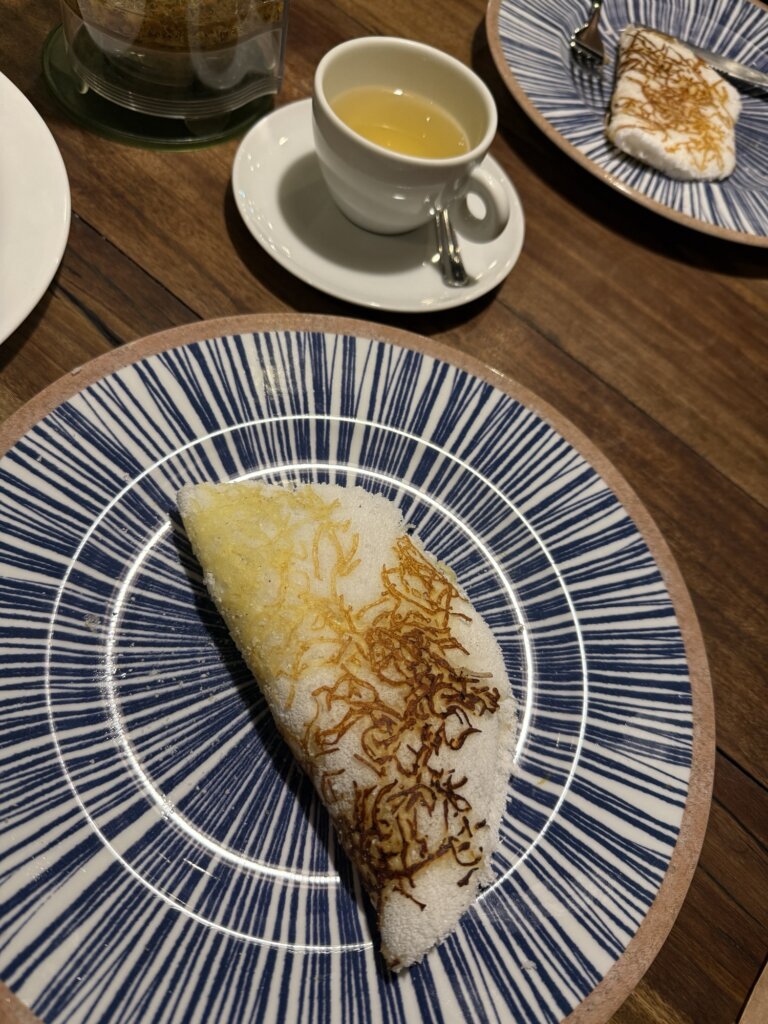
After leaving Olinda, we made another stop for tapioca and cartola. I had the tapioca with dried meat and cheese. Cartola is a traditional Pernambuco dessert made with fried banana, cheese, cinnamon and sugar. Banana and cheese had never occurred to me as a combination. It worked. The cartola was delicious.
Eating Like a Local
We went out to eat twice. The rest of the time, I ate with the family. Her father made my favourite meal of the week: grilled meat with beana and farofa. The beans were flavourful, and the farofa added texture to everything. Farofa is made from toasted cassava flour and appears beside many Brazilian meals. Cassava itself is called macaxeira in Pernambuco. I enjoyed it boiled and liked it even more fried.
Some foods were completely new to me. Cuscuz nordestino is steamed cornmeal that comes out of its mould looking like a small cake. Batata palha consists of thin, crunchy potato sticks sprinkled over food. I wouldn’t have thought pasta needed a crunchy potato topping, but there it was.
Other foods felt familiar. I grew up eating boiled plantain, sweet potato, custard apple in St. Lucia. Custard apple is one of my favourite fruits, so eating it in Recife felt less like trying something local and more like meeting an old favourite again.
There was bolo de rolo, thin layers of cake rolled with guava paste. I also tried bananada and different coconut sweets. The slice of coconut sweet I bought outside Casa da Cultura was cut from a large brick. l didn’t like it because it was much too sour. In St. Lucia we have something called coconut tablet which is sugar and coconut, cooked to a fudgy texture that I prefer.
For Father’s Day, we ate at Bode do Nô. I tried carne de sol, salt-cured beef served grilled and also in a rich cream sauce called nata. The meal came with rice, feijão-verde, vinagrete, farofa, cuscuz and fried macaxeira.
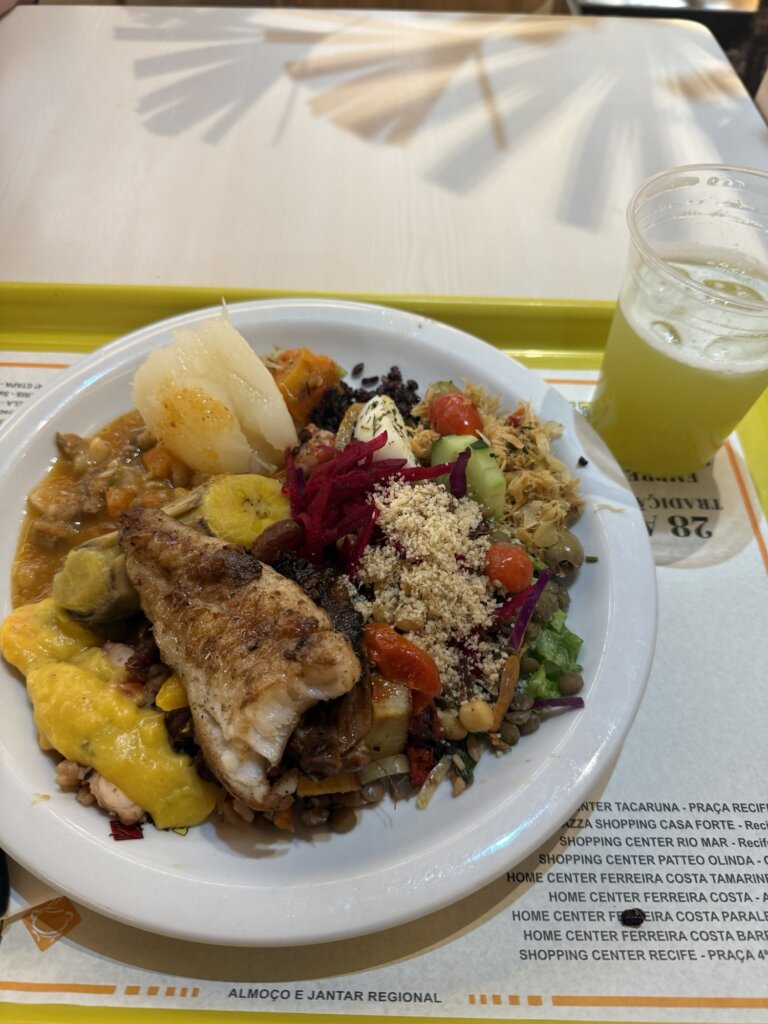
Another evening, we visited a pay-by-weight buffet at Recife Shopping. I chose ribs, tilapia, octopus rice, vegetables, plantain, cassava and chicken. Everything was delicious. My eyes were bigger than my stomach, though, and I couldn’t finish it all. I felt bad about that but hadn’t accounted for how full I would feel from drinking pressed sugar cane juice with my meal.
The food helped me see some of the cultural blending I had noticed among the people of Recife. Indigenous, African and European influences coexist throughout Pernambuco’s history and cooking. Some dishes were new to me. Some used ingredients that had been part of my life since childhood. The pace and rhythm of family life also felt familiar.
Shopping in a Former Prison
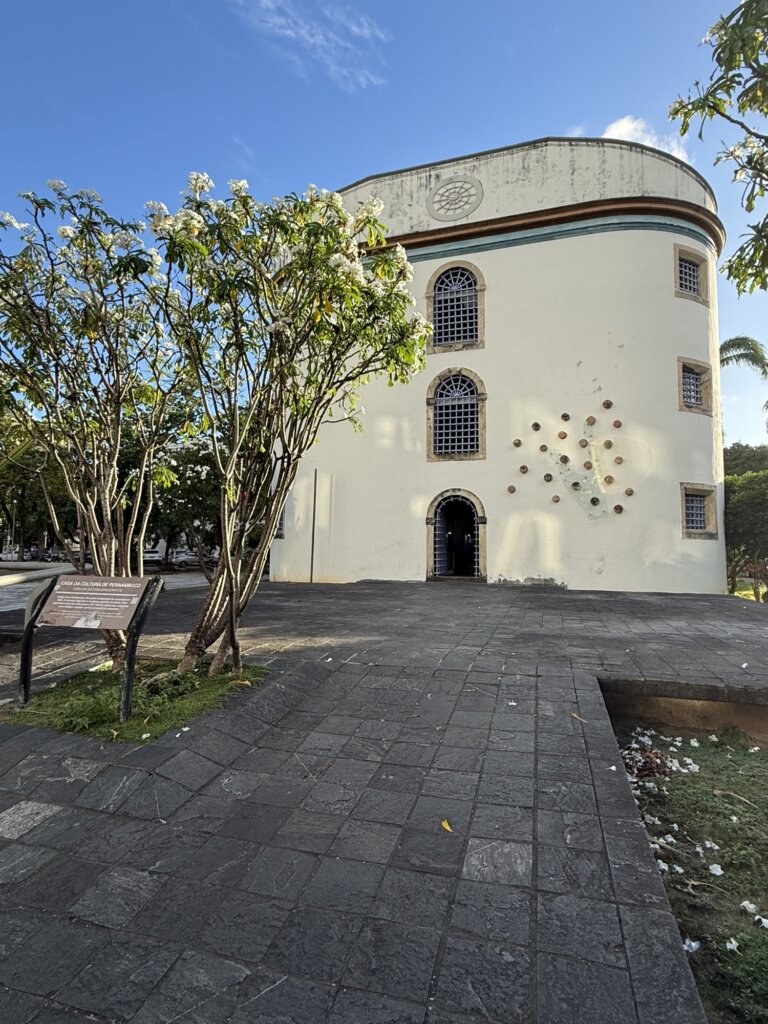
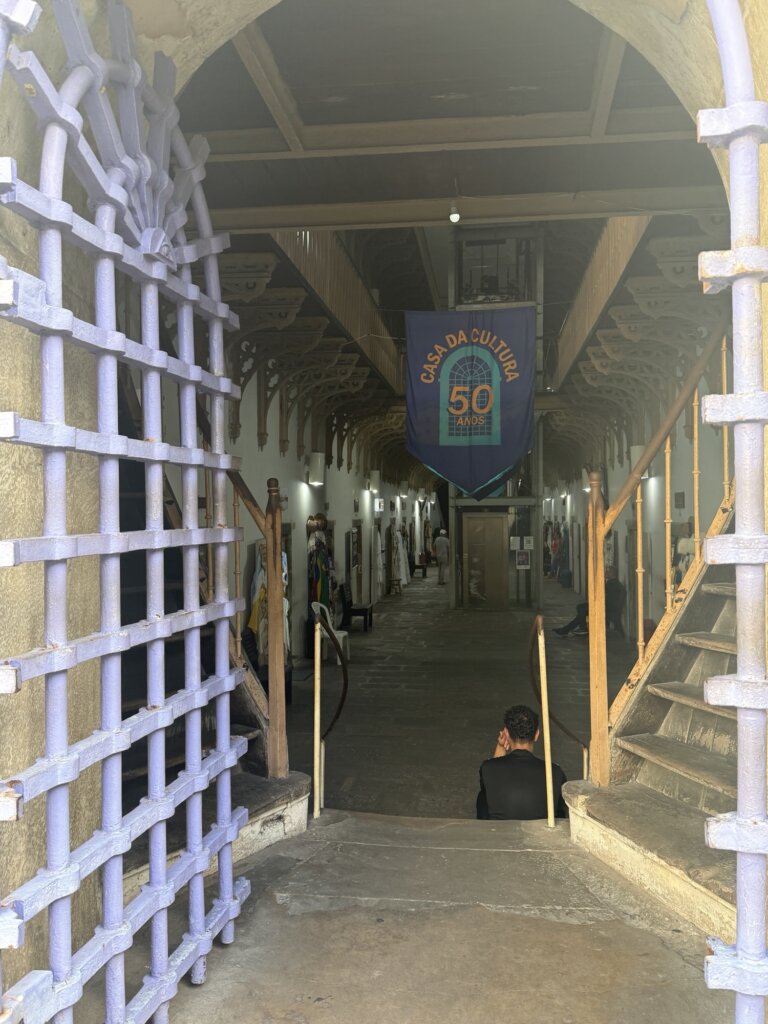
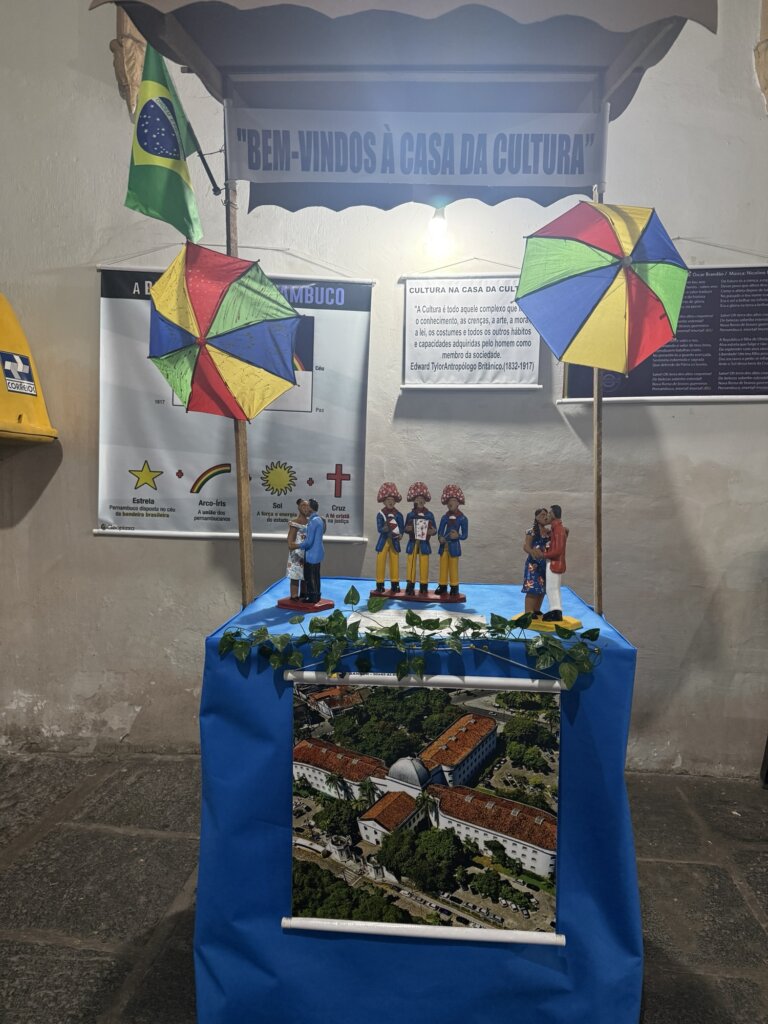
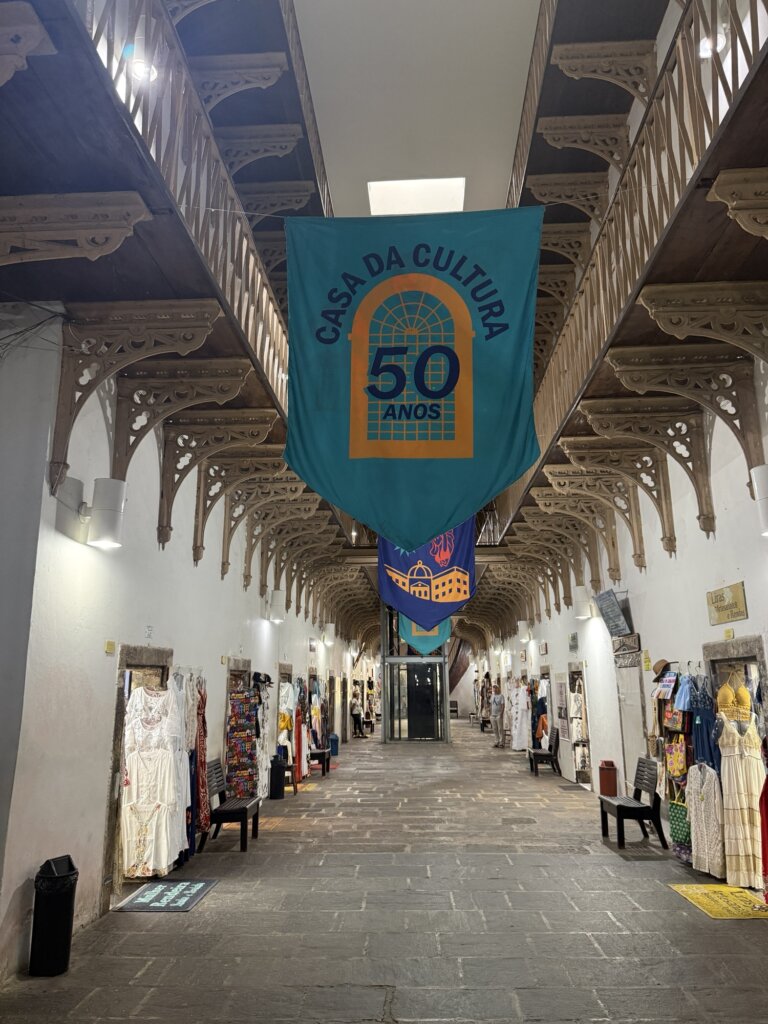
On Tuesday afternoon, after work, we went to Casa da Cultura.
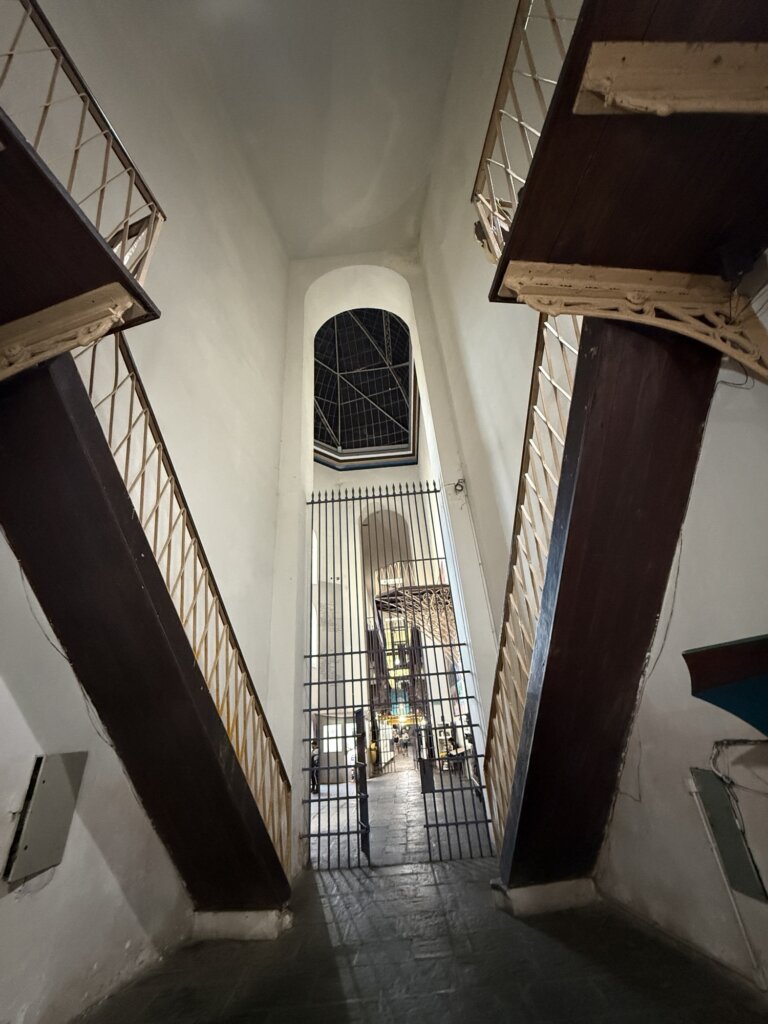
The building was once a prison. Its former cells now hold small shops selling clothing, crafts, souvenirs and food. The structure still looks unmistakably like a prison, with rows of cells facing the central galleries.
My friend bought a T-shirt. I browsed through shops located in spaces with a darker history.
Repurposing a prison as a cultural and shopping centre preserves the building, but it also creates an odd tension. It is easy to become distracted by colourful fabrics and souvenirs while the cell structure remains.
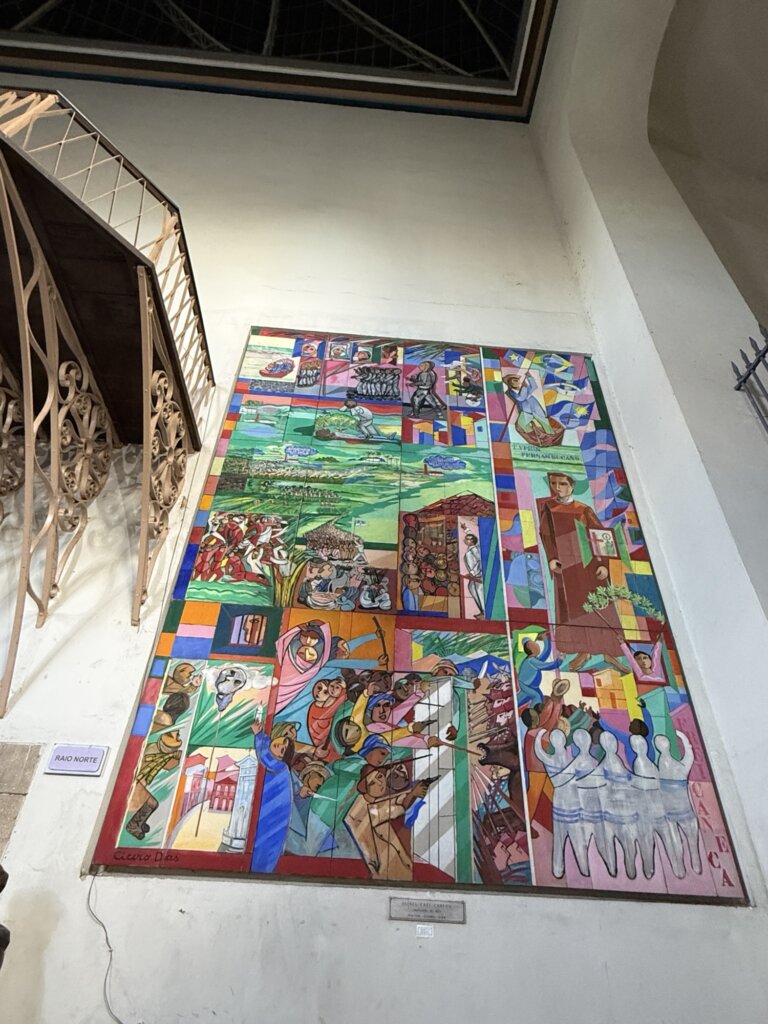
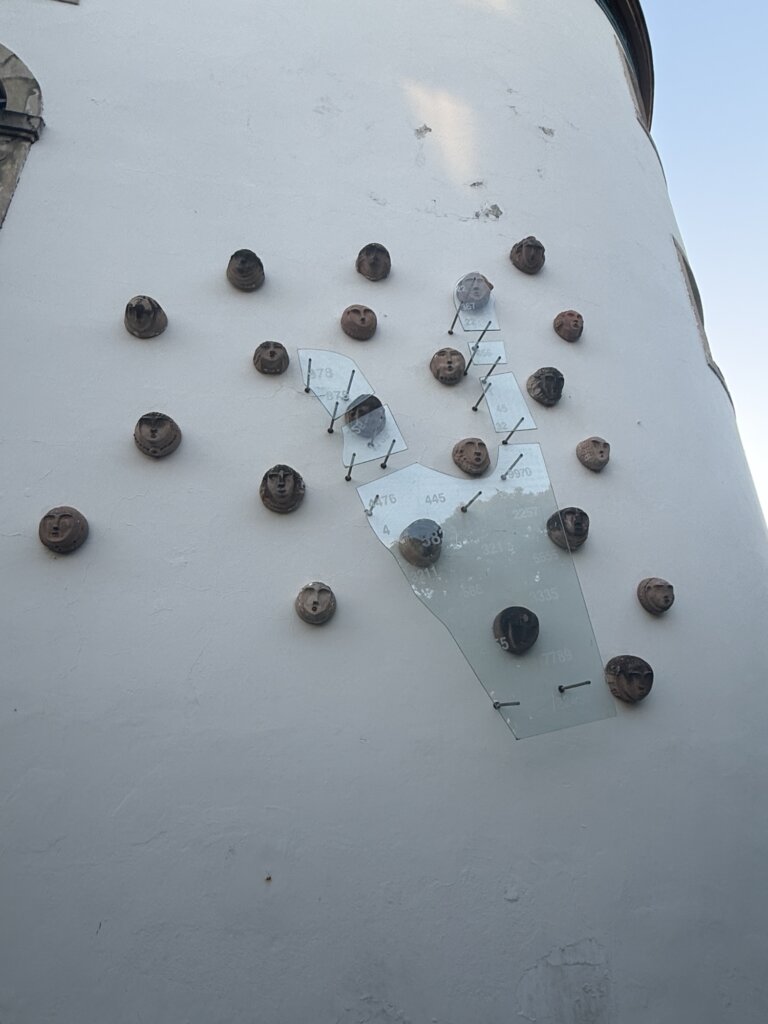
Francisco Brennand’s Strange World
On Wednesday afternoon, we Ubered across Recife to Oficina Francisco Brennand. It took more than 50 minutes from Boa Viagem.
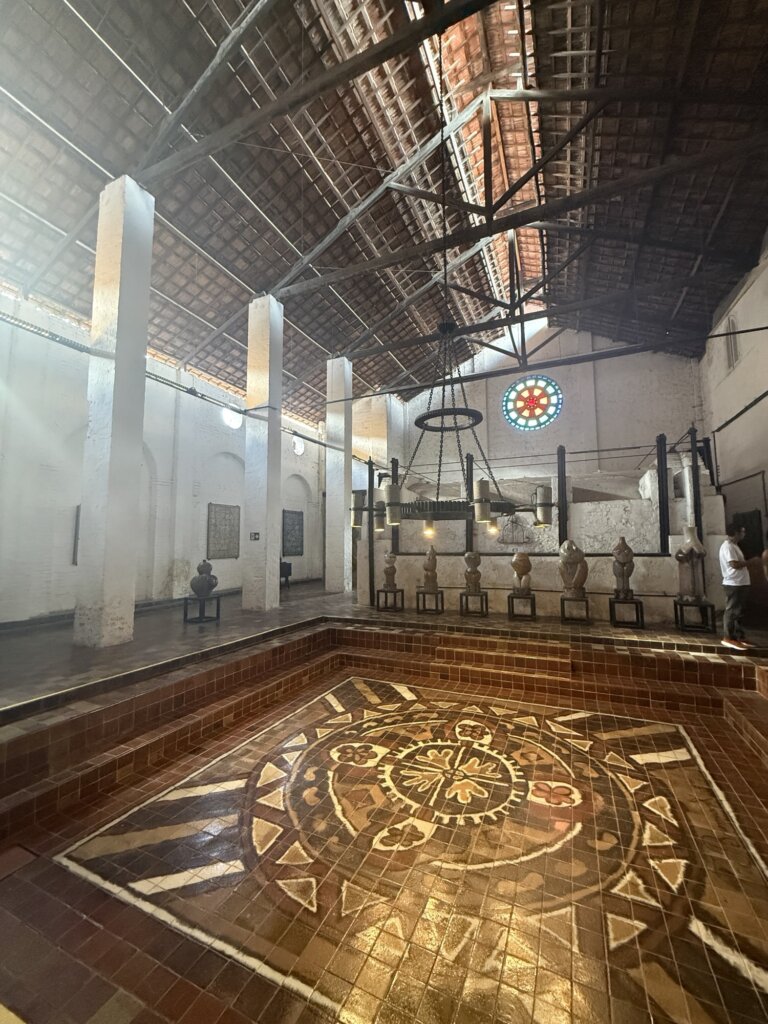
In 1971, Brennand took over the ruins of his father’s former tile and brick factory and turned them into his studio. It eventually became a museum filled with more than 2,000 of his works.
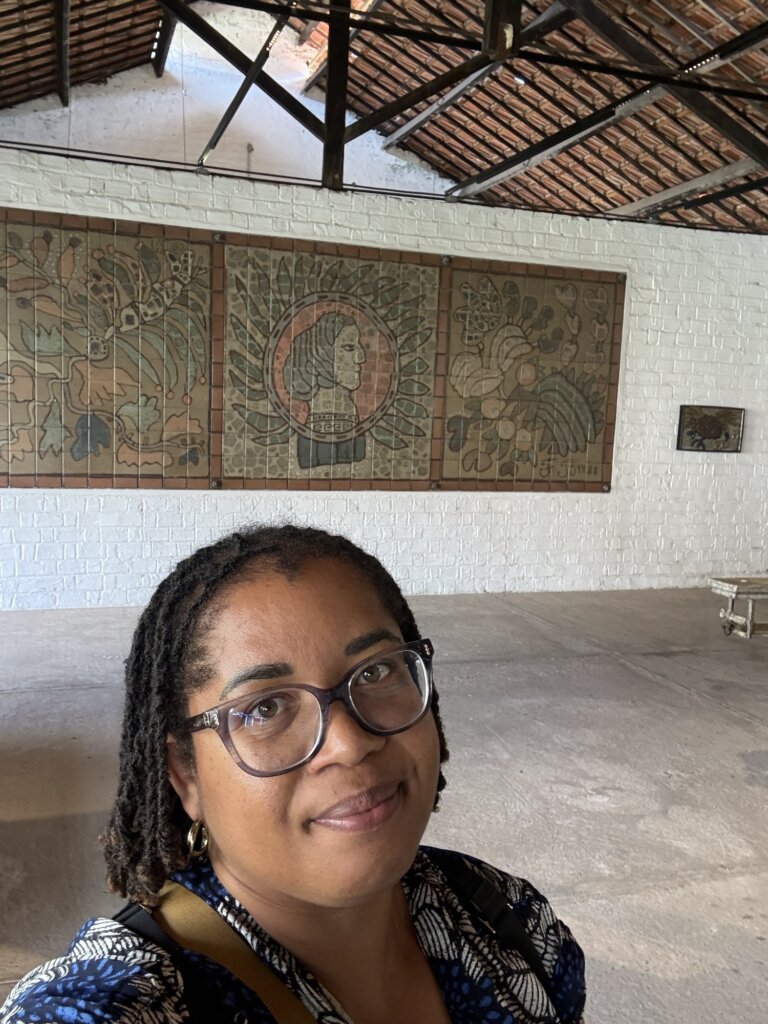
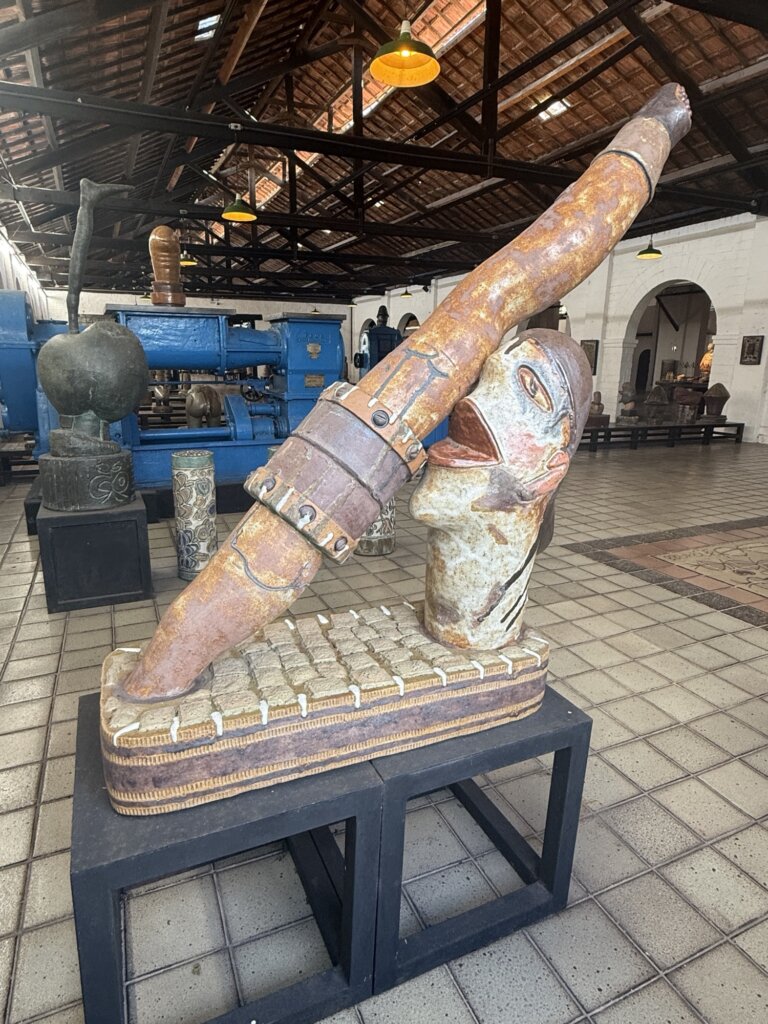
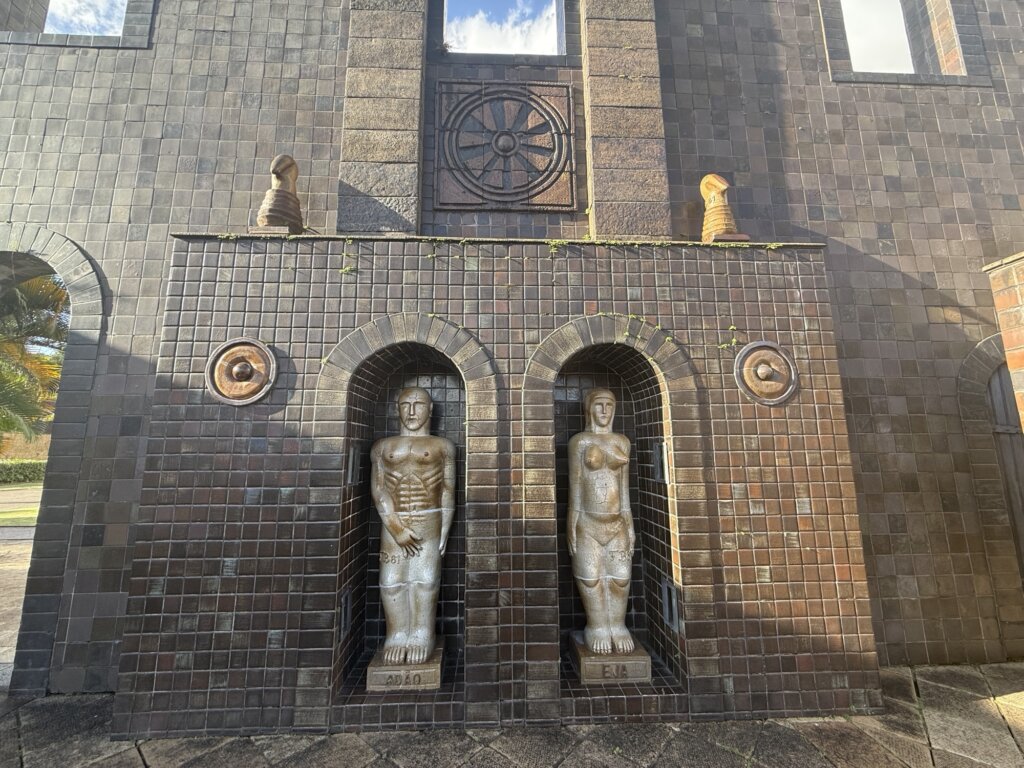
The setting was as interesting as the art. Sculptures occupied former factory buildings, courtyards, gardens and temple-like spaces. It felt separate from the rest of Recife, as though Brennand had built his own civilization and filled it with the remains of a mythology known only to him. I was entertained.
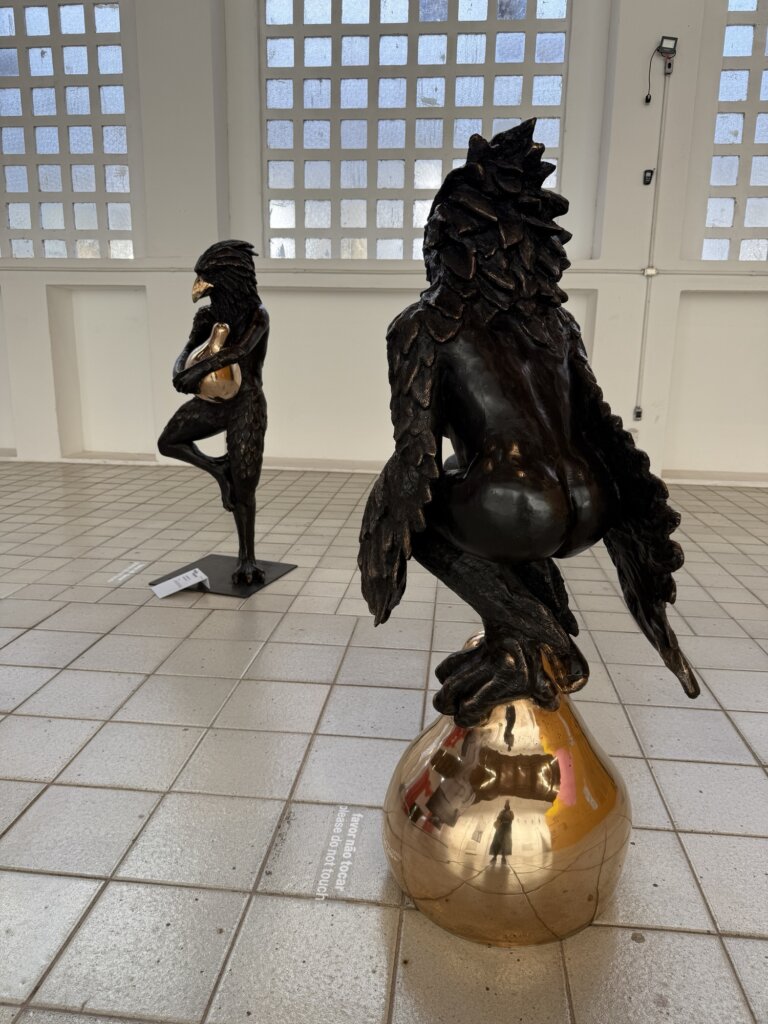
Some of the art seemed primitive to me. The figures looked ancient, distorted and sometimes unsettling. There were eggs, birds, bodies, sexual forms and creatures I couldn’t identify.
I didn’t always understand what Brennand was trying to say. I’m also not sure that understanding was necessary to enjoy walking through the world he created.
After visiting the Oficina, the enormous phallic tower across from Marco Zero seemed less surprising. Of course that was his.
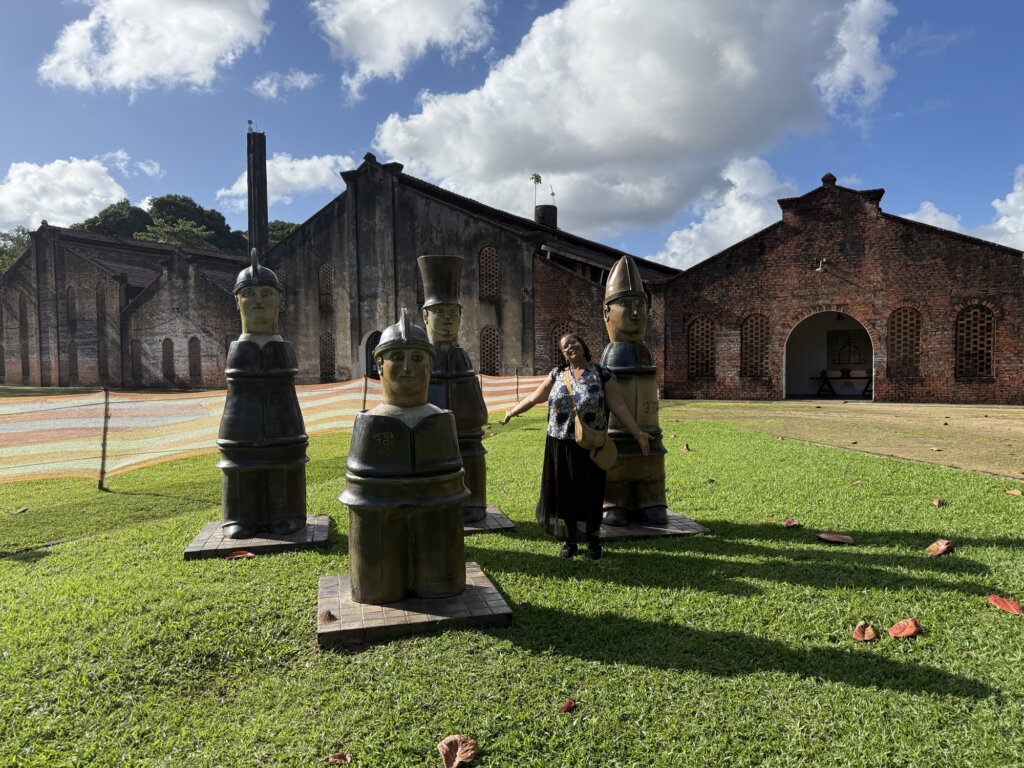
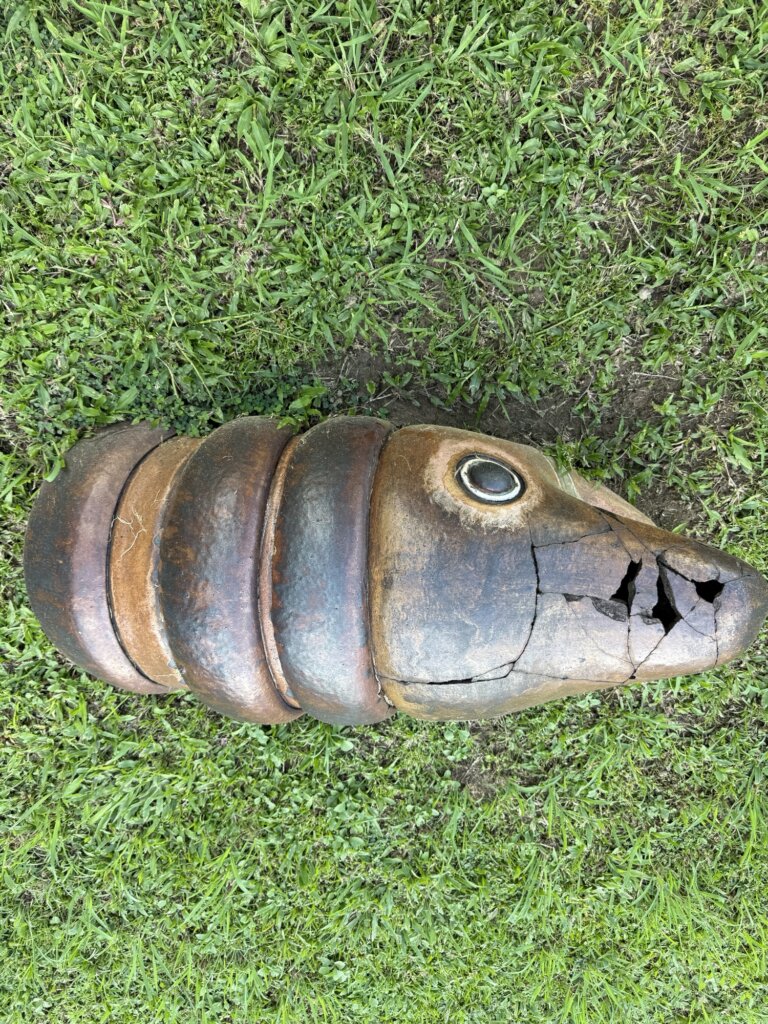
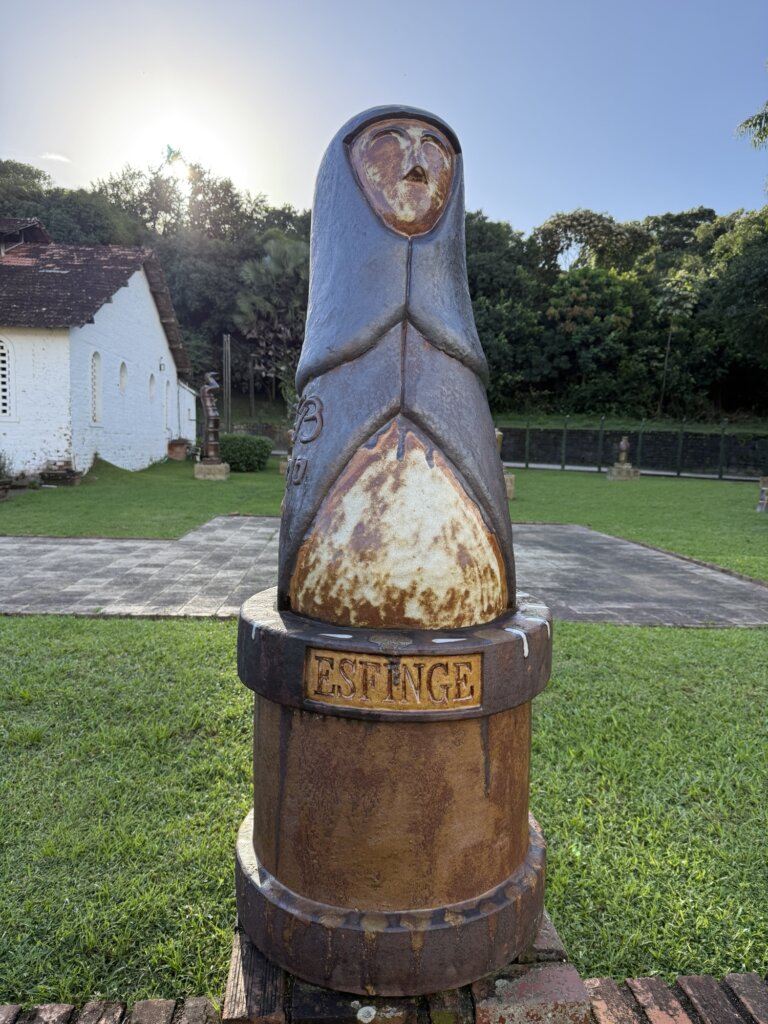
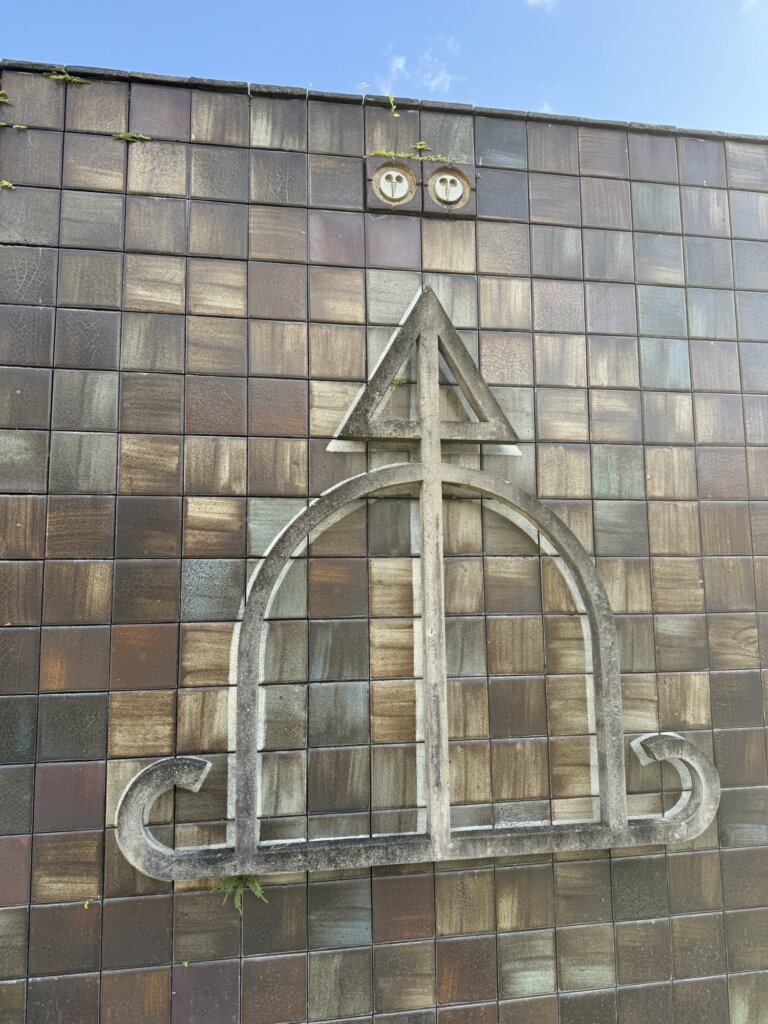
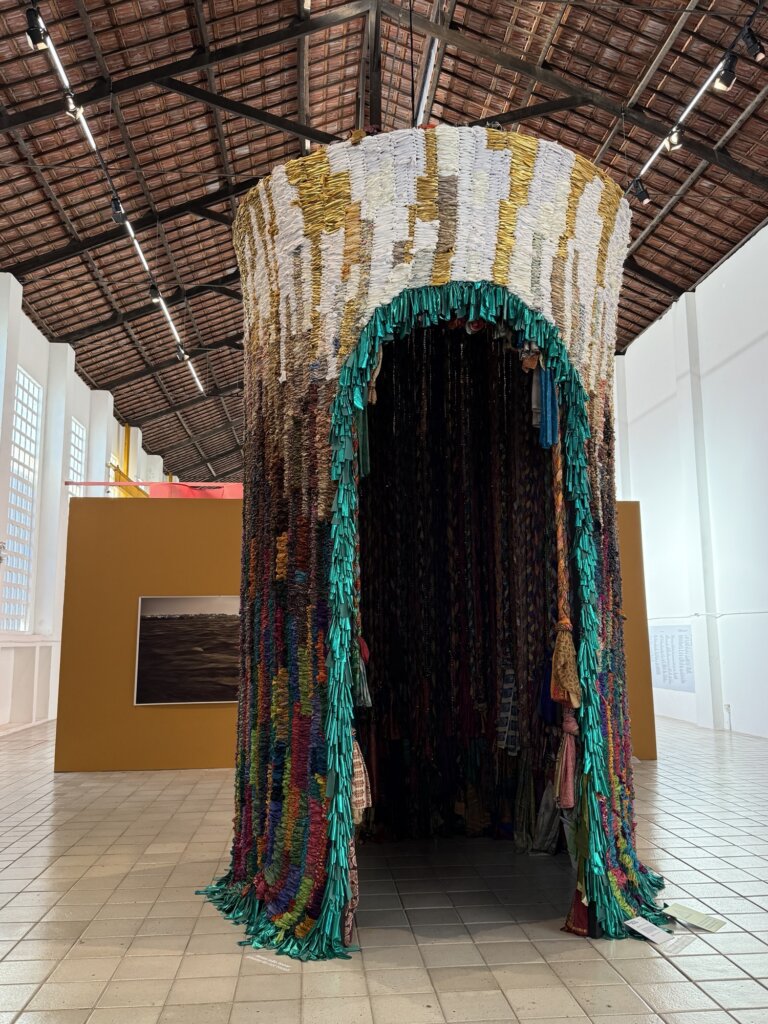
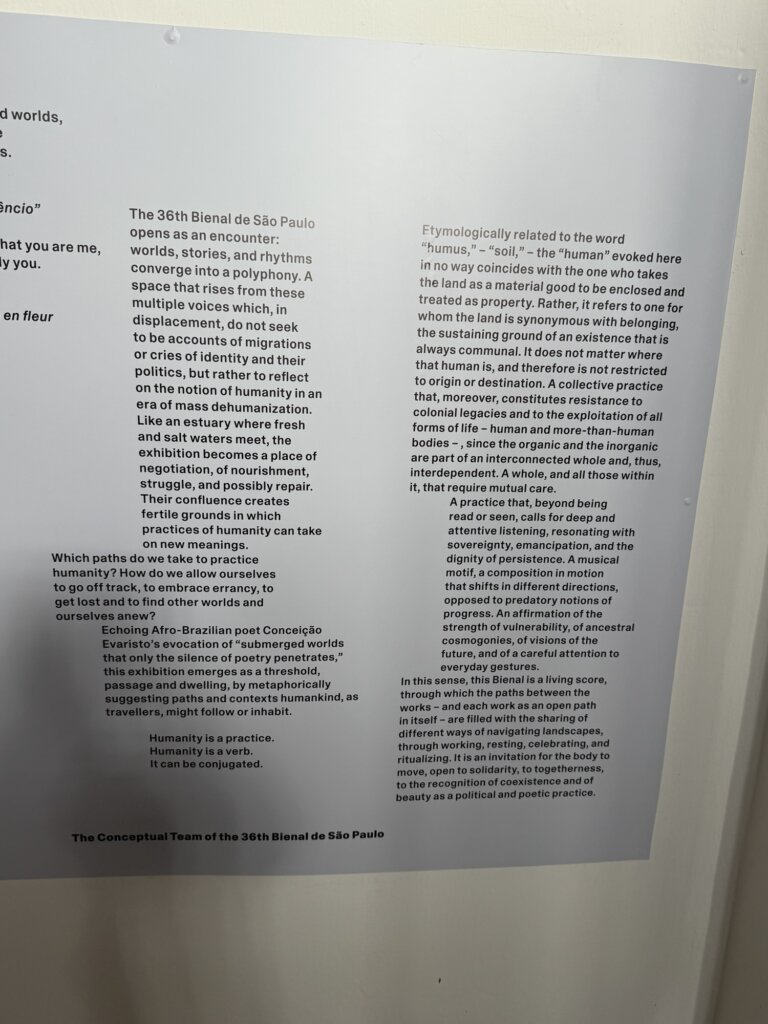
As we were about to leave the museum, we remembered that there was a traveling exposition. It was about displacement and migration. I went to sleep as I mentioned to Sudan and also Nigeria, both places are nothing with Nigeria being recent.
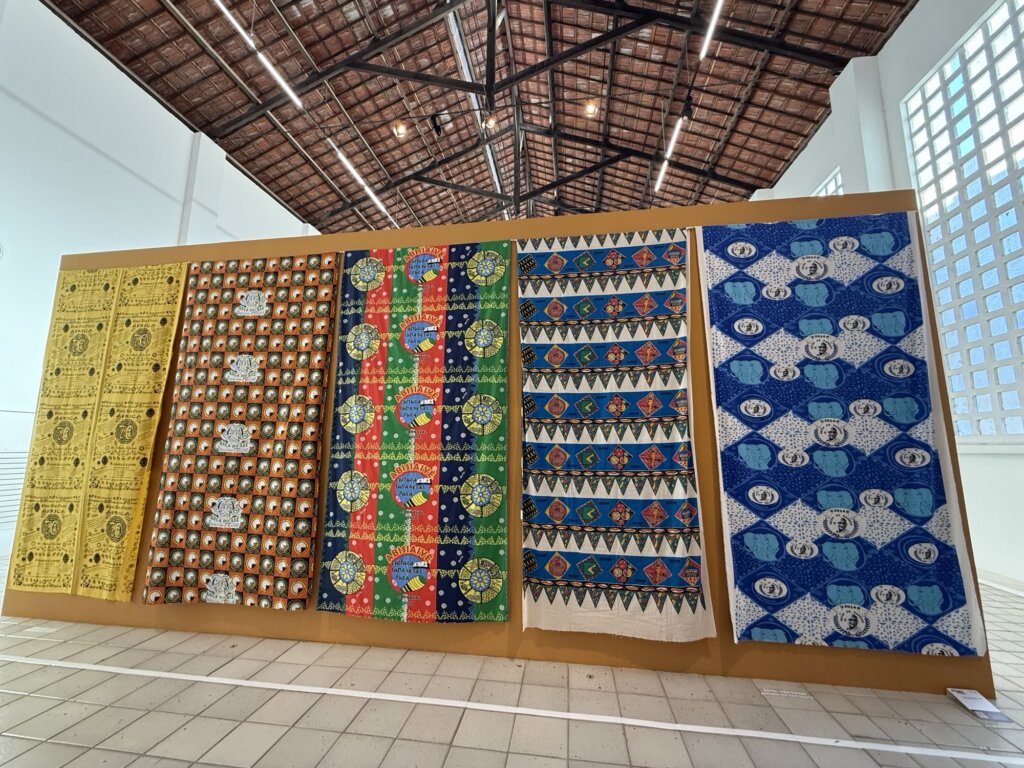
More Than Carnival
Before visiting, Recife was mostly a name to me. I knew that it was a coastal city in northeastern Brazil, and I knew Brazil was famous for Carnival. A week there gave me a more specific picture.
Recife was frevo umbrellas and the drums of maracatu. It was the kings of Congo carried forward in a Brazilian procession. It was Naná Vasconcelos holding his drum beside the water and giant puppets waiting for the next Carnival in Olinda.
It was also my friend’s father cooking feijão-verde and grilled meat, bougainvillea growing along steep streets, and condensed milk a popular ingredient in many many desserts.
I experienced Recife in pieces because I was working. A full weekend, an afternoon at a former prison, another afternoon in Brennand’s strange ceramic world. I didn’t need to stop working or see everything to feel the richness of the place.
Some of Recife was unfamiliar. Some of it reminded me of St. Lucia, especially the food, the cultural blending and the rhythm of family life.
What stayed with me most was how culturally rich it is. Carnival may be the most visible expression of that culture, but underneath the colour and celebration is a history that stretches across space and time.
Be First to Comment